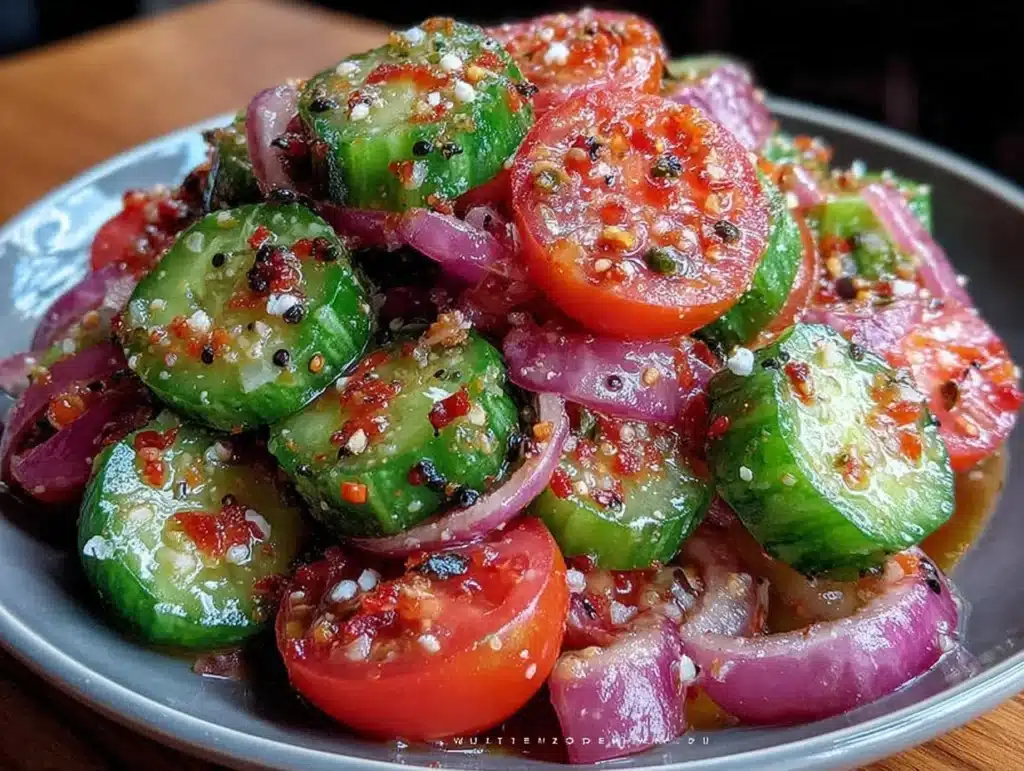
There is a specific kind of crunch that only happens when you bite into a cucumber that has been sitting in the fridge for two days. It’s crisp, cool, and utterly refreshing. I remember the first time I truly appreciated this simple trio. It was a sweltering July afternoon, and the heat was so thick it felt like breathing through a wet blanket. My kitchen was basically an oven, and the last thing I wanted to do was turn on the stove. So, I opened the fridge, grabbed a few bruised tomatoes, a half onion, and a limp cucumber, and just tossed them together. Honestly, it changed how I look at side dishes forever.
Most people think of this as just a “salad,” but it’s really more like a palate cleanser for your entire meal. It cuts through richness, balances heavy flavors, and adds that vital burst of freshness that other dishes often lack. I’ve made this cucumber onion and tomato salad hundreds of times over the years. Sometimes I’m in a rush, sometimes I’m planning a fancy dinner party. The beauty of it is that it works in every single scenario. You know how it is when you’re tired after work? This recipe is your best friend. It requires zero cooking skills and almost zero effort.
Let’s face it, we all need more vegetables in our lives, but let’s be honest—they can be boring if prepared poorly. This combination takes ordinary ingredients and turns them into something vibrant and exciting. It’s not just about nutrition, though that’s a huge bonus. It’s about texture and temperature contrast. The sharp bite of the onion meets the juicy sweetness of the tomato, all held together by that cool snap of the cucumber. It’s the kind of dish that makes you close your eyes and sigh with satisfaction. If you are looking for a healthy, quick, and flavorful addition to your weekly menu, this is it.
Why You’ll Love This Recipe
After testing countless variations of summer salads, I’ve found that simplicity is actually the hardest thing to master. But this cucumber onion and tomato salad? It’s the gold standard. I don’t say that lightly. I’ve had friends over who are serious foodies, and they always ask for the recipe before they even finish their main course. Here is why this specific combination wins every single time.
- Quick & Easy: You can have this on the table in less than ten minutes. Seriously. That includes chopping time. It is perfect for those weeknights when you are exhausted and just want to eat something good without spending hours in the kitchen.
- Simple Ingredients: You likely already have everything in your kitchen right now. No need for a special trip to the store for obscure herbs or expensive oils. It relies on staples that taste better when they are fresh.
- Perfect for Summer: This salad shines when the weather is hot. It doesn’t need to be heated, which keeps your house cool and your food light. It’s ideal for barbecues, picnics, or just a hot lunch on the porch.
- Crowd-Pleaser: Even the pickiest eaters usually enjoy this. Kids love the crunch, and adults appreciate the balance of flavors. It’s a safe bet for potlucks where you don’t want to risk offending anyone.
- Unbelievably Delicious: Don’t let the simplicity fool you. When you get the ratios right, the flavor profile is complex. You get the pungency of the onion, the acidity of the tomato, and the hydration of the cucumber working in harmony.
What makes this different from other salads is the preparation technique. Many people just chop everything up and dump it in a bowl. But if you let it sit for just a few minutes, the salt draws out the juices, creating a natural dressing. It’s a technique I learned from my grandmother, who didn’t believe in waste or complicated steps. She knew that good ingredients speak for themselves. This recipe isn’t just a side dish; it’s a reminder that cooking can be joyful and effortless.
What Ingredients You Will Need
This recipe relies on the quality of your produce more than anything else. Since there are only three main components, each one needs to shine. I like to use ingredients that are in season and locally sourced when possible, but this works well with standard grocery store finds too. The key is freshness. If your vegetables are old, the salad will taste flat. Here is what you need to gather.
- English Cucumbers (3 medium): I prefer English cucumbers because they have fewer seeds and a thinner skin. Regular slicing cucumbers work too, but you might want to peel them if the skin is thick or waxy. English cucumbers are crisp and have a mild flavor that doesn’t overpower the dish.
- Red Onions (1 medium): Red onions are my top choice because they are sweeter and less pungent than yellow or white onions. They add a beautiful pop of purple color to the bowl. If you can’t find red onions, a mild white onion is an acceptable substitute, though the flavor will be sharper.
- Ripe Tomatoes (4 medium): Look for tomatoes that are heavy for their size and smell fragrant. Vine tomatoes or beefsteak tomatoes are great options. Avoid tomatoes that are mealy or tasteless. If it’s not tomato season, cherry tomatoes are a fantastic alternative because they are consistently sweet and juicy.
- Extra Virgin Olive Oil (3 tablespoons): Use a good quality oil. Since it is a raw dressing, the oil’s flavor will be prominent. Look for an oil that has a fruity or peppery note. Cheap oil can taste bitter and ruin the balance.
- Fresh Lemon Juice (2 tablespoons): Freshly squeezed lemon juice is non-negotiable. Bottled juice often has preservatives that taste metallic. The acidity cuts through the richness of the olive oil and brightens the vegetables.
- Fine Sea Salt (1 teaspoon): Salt is what brings everything together. It draws out moisture and enhances the natural flavors. Kosher salt works too, but you may need to use a bit more since the grains are larger.
- Black Pepper (1/2 teaspoon): Freshly cracked black pepper adds a subtle heat and aroma. Pre-ground pepper loses its potency quickly, so grind it yourself if you can.
- Fresh Mint or Parsley (Optional, 2 tablespoons): While not traditional in every version, I love adding a handful of chopped mint. It adds a cooling effect that pairs beautifully with the cucumber. Flat-leaf parsley is another great option for a more classic taste.
When selecting your vegetables, try to find ones that are similar in size so they chop evenly. This ensures that every bite has a good mix of textures. I also recommend buying organic if your budget allows, especially for the tomatoes and cucumbers, as the skin is edible and you want to avoid excess pesticides. Remember, the better your ingredients, the better your salad will taste.
Equipment Needed
You don’t need a fancy kitchen to make this salad. In fact, keeping your equipment simple helps keep the process quick. Here is what you will need to get started.
First, you will need a sharp chef’s knife. This is the most important tool. A dull knife will crush the tomatoes and make the job much harder. A sharp knife allows you to slice the cucumber cleanly without bruising the flesh. I use a German steel knife for my daily chopping, but any high-quality stainless steel knife will do. Just make sure it is clean and dry before you start.
Next, you will need a large cutting board. I prefer a wooden board because it is gentle on my knife blades. Plastic boards are easier to sanitize, so use what works for your hygiene preferences. Just ensure it is large enough to hold all three vegetables while you are chopping. A small board will lead to a messy kitchen and frustrated chopping.
You will also need a large mixing bowl. This should be big enough to hold all the chopped vegetables with room to toss them. Glass or ceramic bowls are nice because they don’t retain odors from previous meals. Plastic bowls are lighter and less likely to break, which is good if you are taking the salad to a picnic. Just avoid metal bowls as they can react with the acidic lemon juice.
For measuring, a set of measuring spoons is helpful for the oil and lemon juice. While you can eyeball it, having precise measurements helps you learn the balance that works for you. Finally, a salad tosser or two large spoons will help you mix everything gently. You don’t want to mash the vegetables, so use a light touch when combining the ingredients.
How do I keep the salad from getting watery?
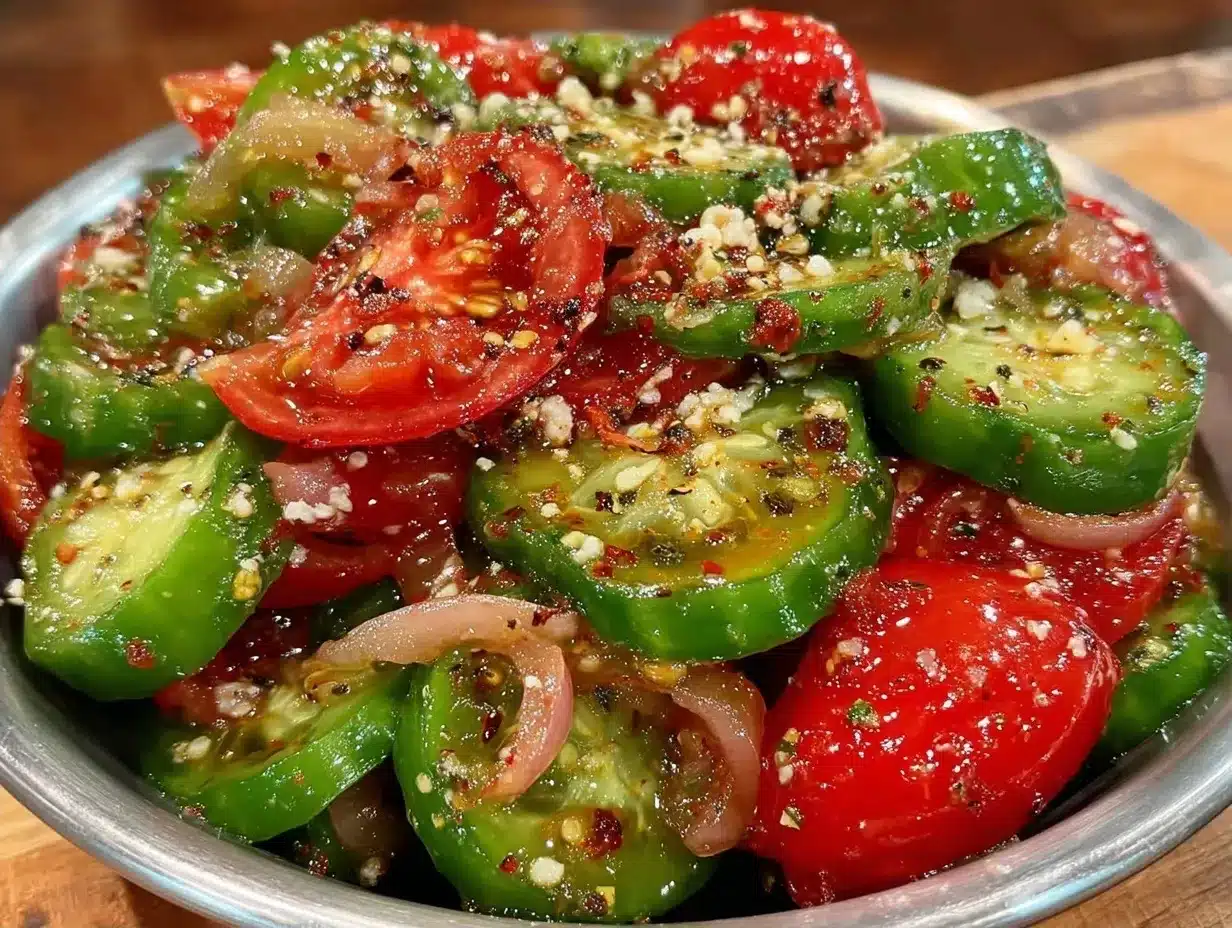
This is a common concern. To prevent sogginess, salt the cucumbers and onions separately for about ten minutes before adding the tomatoes. Drain the excess liquid, then combine everything. This way, the tomatoes release their juice into the dressing rather than making the whole bowl watery.
Preparation Method
Making this salad is straightforward, but there are a few techniques that will take it from “okay” to “amazing.” Follow these steps carefully for the best results. The total time is about fifteen minutes, including prep and resting.
- Wash and Prep the Vegetables: Start by rinsing all your vegetables under cold water. Pat them dry with a clean towel. Moisture on the surface can dilute your dressing. If you are using regular cucumbers, peel them if the skin is tough. For English cucumbers, you can leave the skin on for extra crunch and color. Trim off the ends of the cucumbers.
- Chop the Cucumbers: Slice the cucumbers in half lengthwise. If they are very large, you can scoop out the seeds with a spoon, but this is optional. Slice them into half-moons or thin rounds. Try to keep the slices uniform so they cook (or rather, rest) evenly. You want them to be thin enough to eat easily but thick enough to hold their shape.
- Slice the Red Onions: Peel the red onion and cut off the top and bottom. Slice it in half vertically, then place it flat side down. Make thin vertical slices. For a milder flavor, you can soak these slices in a bowl of ice water for five minutes. This removes some of the harsh bite. Drain and pat dry before using.
- Prepare the Tomatoes: Core the tomatoes and cut them into wedges or chunks. If you are using cherry tomatoes, just halve them. Do not chop them too small, or they will turn into mush when tossed. You want distinct pieces that you can taste individually.
- Combine the Base: In your large mixing bowl, combine the sliced cucumbers and red onions. Sprinkle half of the salt over them. Toss gently to coat. Let this mixture sit for ten minutes. This step is crucial as it draws out excess water from the cucumbers and mellows the onion flavor.
- Drain Excess Liquid: After ten minutes, you will see liquid in the bowl. Pour off this liquid. You can discard it or save it for a vinaigrette if you like. The vegetables will be slightly wilted, which is exactly what we want.
- Add Tomatoes and Dressing: Add the chopped tomatoes to the bowl. In a small separate bowl or jar, whisk together the olive oil, lemon juice, remaining salt, and black pepper. Shake or whisk until emulsified. Pour the dressing over the vegetables.
- Toss and Rest: Gently toss the salad to coat everything evenly. If you are using mint or parsley, add it now. Cover the bowl and let it rest in the refrigerator for another ten to fifteen minutes. This allows the flavors to meld together. The tomatoes will release some juice, creating a light, natural dressing.
- Serve: Give the salad a final gentle toss. Taste it and adjust seasoning if needed. Add more salt or lemon juice if it tastes bland. Serve chilled or at room temperature. It pairs beautifully with grilled meats, fish, or even just a slice of crusty bread.
Pay attention to the texture as you toss. If the vegetables look dry, add a splash more oil. If they look wet, let them drain a bit longer. The goal is a glossy, vibrant salad, not a soupy one. Trust your eyes and your taste buds during this process.
Cooking Tips & Techniques
Even though this recipe doesn’t involve heat, there are techniques that separate the pros from the amateurs. I learned these through trial and error, including a few disasters where I over-salted the dish. Here is how to avoid those mistakes.
First, knife skills matter. Uniform cuts ensure that every bite has the same ratio of ingredients. If you have huge chunks of onion and tiny bits of cucumber, the flavor distribution will be off. Take your time slicing. It doesn’t have to be perfect, but consistency helps. A sharp knife is your best friend here. A dull knife makes everything harder and more dangerous.
Second, don’t skip the resting time. I know you might be hungry and want to eat it immediately. But letting the salad sit allows the salt to penetrate the vegetables. It also allows the oil and acid to coat the surfaces properly. The flavor develops significantly after ten minutes. If you rush this step, the salad will taste disjointed. Patience is a virtue in the kitchen.
Third, balance your acid and fat. The ratio of olive oil to lemon juice is key. If it tastes too heavy, add more lemon. If it tastes too sour, add more oil. Taste as you go. Everyone’s palate is different. Some people like it tangy, others prefer it rich. Adjust to your preference. Don’t be afraid to tweak the recipe to suit your taste.
Fourth, control the moisture. As mentioned earlier, cucumbers release a lot of water. If you are making this ahead of time, keep the dressing separate until you are ready to serve. This keeps the vegetables crisp. If you mix it too early, it will become soggy. Plan your timing accordingly. This is especially important if you are bringing it to a potluck.
Finally, use fresh herbs. Dried herbs do not work well in this salad. The texture is wrong, and the flavor is muted. Always use fresh mint, parsley, or dill. They add a brightness that dried spices cannot match. Keep your herbs refrigerated until the last moment to preserve their vitality. Freshness is the secret ingredient here.
Can I make this salad ahead of time?
Yes, but with a caveat. You can chop the vegetables and store them in an airtight container in the fridge for up to 24 hours. However, do not add the dressing until just before serving. If you add the dressing too early, the tomatoes will break down and the salad will become watery. Keep the components separate for the best texture.
Variations & Adaptations
While the classic version is fantastic, this salad is versatile. You can adapt it to suit different dietary needs or flavor preferences. Here are a few variations I enjoy.
Adding Feta Cheese: Crumbled feta cheese is a classic addition. It adds a salty, creamy element that contrasts nicely with the crisp vegetables. Use about half a cup of crumbled feta. This makes the salad more substantial and suitable as a light meal. It pairs especially well with grilled chicken or lamb.
Spicy Kick: If you like heat, add a diced jalapeño or a pinch of red pepper flakes. The spice cuts through the coolness of the cucumber and adds complexity. Start with a small amount and adjust to your tolerance. This version is great with tacos or grilled fish.
Mediterranean Twist: Add kalamata olives and a drizzle of balsamic vinegar. The olives add a briny depth, and the balsamic adds a sweet-tart note. This variation is rich and flavorful, perfect for pairing with pasta or grain bowls. It feels more indulgent than the original version.
Vegan Option: This recipe is naturally vegan if you omit the feta. Ensure your olive oil and lemon juice are high quality. You can add toasted pine nuts or walnuts for extra crunch and protein. This makes it a hearty side dish for any vegan meal.
Asian-Inspired: Swap the olive oil for sesame oil and add a splash of rice vinegar and soy sauce. Garnish with sliced scallions and sesame seeds. This variation is lighter and has a different flavor profile, great for Asian dishes or sushi. It’s a fun way to experiment with global flavors.
Feel free to mix and match these ideas. The base recipe is a canvas for your creativity. Just remember to taste as you go and adjust seasonings accordingly. There is no right or wrong way to make this salad, as long as it tastes good to you.
What if I am allergic to onions?
If you cannot eat onions, you can substitute them with scallions or shallots, which are milder. For a completely onion-free version, try adding sliced radishes for crunch and a peppery bite. Or, use cucumber and tomato only, adding more herbs like dill or basil for flavor. The salad will still be delicious and refreshing.
Serving & Storage Suggestions
This salad is incredibly versatile when it comes to serving. It can be a side dish, a topping, or even a light lunch. Here is how to present and store it for the best experience.
Serving Ideas: This salad pairs beautifully with grilled meats like chicken, beef, or lamb. The acidity cuts through the fat of the meat, creating a balanced bite. It is also excellent with grilled fish, especially salmon or white fish. For a vegetarian meal, serve it over quinoa or with warm pita bread. It adds a fresh contrast to rich, heavy dishes.
Presentation: Serve the salad in a shallow bowl to showcase the colors. The red of the tomatoes, the green of the cucumbers, and the purple of the onions are visually appealing. Garnish with a sprig of fresh mint or a sprinkle of feta. A light drizzle of olive oil just before serving adds a nice sheen. Make it look as good as it tastes.
Storage: Store leftovers in an airtight container in the refrigerator. It will keep for up to two days. However, the texture will change over time as the vegetables continue to release moisture. It is best eaten fresh. If you must store it, keep the dressing separate if possible. Consume within 24 hours for the best quality.
Reheating: Do not reheat this salad. It is meant to be eaten cold or at room temperature. Heating will wilt the vegetables and ruin the texture. If you have leftovers, enjoy them cold the next day. They make a great lunch packed in a container.
Flavor Development: The flavors actually improve after sitting for a few hours. The vegetables marinate in the dressing, becoming more flavorful. However, after 24 hours, the tomatoes may become too soft. Plan to eat it within a day or two for the best experience. It is a fresh, vibrant dish that is best enjoyed soon after preparation.
Can I freeze this salad?
No, freezing is not recommended. The high water content in cucumbers and tomatoes means they will become mushy and watery upon thawing. The texture will be completely ruined. This salad is best enjoyed fresh. If you have too much produce, consider making a large batch and sharing it with friends or neighbors.
Nutritional Information & Benefits
This salad is not only delicious but also nutritious. It is low in calories and high in vitamins and minerals. Here is a breakdown of the benefits.
Hydration: Cucumbers are over 95% water, making them excellent for hydration. This is especially important in hot weather or after exercise. Eating water-rich foods helps you stay hydrated without drinking excessive amounts of water.
Vitamins: Tomatoes are rich in vitamin C, vitamin K, and potassium. They also contain lycopene, an antioxidant that supports heart health. Cucumbers provide vitamin K and magnesium. Red onions contain quercetin, which has anti-inflammatory properties.
Low Calorie: This salad is very low in calories, making it a great choice for weight management. You can eat a large portion without consuming many calories. The fiber from the vegetables helps you feel full and satisfied.
Dietary Friendly: This recipe is naturally gluten-free, vegan, and paleo-friendly (without cheese). It is also low-carb and keto-friendly if you limit the tomatoes. It fits easily into most dietary plans. Always check labels on packaged ingredients like cheese or oil to ensure they meet your dietary needs.
Allergens: This recipe contains no common allergens like nuts, dairy, or gluten. It is safe for most people with food allergies. If you are sensitive to onions, use the substitutions mentioned earlier. Always consult with a healthcare provider if you have specific dietary concerns.
Is this salad good for weight loss?
Yes, this salad is an excellent choice for weight loss. It is low in calories and high in volume, which helps you feel full. The fiber content aids digestion and keeps you satisfied. Pair it with a lean protein source for a complete, weight-loss-friendly meal. It’s a smart way to add more vegetables to your diet without adding extra calories.
Conclusion
This cucumber onion and tomato salad is a testament to the power of simplicity. It proves that you don’t need complicated techniques or exotic ingredients to make something extraordinary. It’s a dish that brings joy to the table with its vibrant colors and refreshing taste. I hope you try this recipe and find it as comforting and reliable as I do.
Feel free to experiment with the variations and make it your own. Add your favorite herbs, adjust the spice level, or serve it with your favorite protein. The possibilities are endless. I love this recipe because it is versatile, healthy, and incredibly easy to make. It has become a staple in my kitchen, and I think it will become one in yours too.
Please share your experiences in the comments below. Did you add feta? Did you use a specific type of tomato? I love hearing how you adapt recipes. If you enjoyed this post, consider sharing it with a friend who loves fresh salads. Let’s spread the joy of simple, delicious food. Happy cooking!
FAQs
How long does this salad last in the fridge?
This salad is best eaten within 24 hours. While it can last up to two days in an airtight container, the texture of the tomatoes and cucumbers will degrade over time. For the best crispness and flavor, consume it fresh.
Can I use white onions instead of red onions?
Yes, you can use white or yellow onions, but they will be more pungent and less sweet. To mellow the flavor, soak the sliced onions in ice water for 10-15 minutes before adding them to the salad. This removes some of the harsh bite.
What kind of tomatoes are best for this salad?
Vine tomatoes or beefsteak tomatoes are ideal because they are firm and flavorful. Cherry or grape tomatoes are also excellent choices, especially if you want a sweeter taste and easier handling. Avoid mealy or tasteless tomatoes.
Can I add protein to this salad?
Absolutely. Grilled chicken, shrimp, or tofu are great additions. Crumbled feta or goat cheese also add protein and a creamy texture. Adding protein turns this side dish into a satisfying main course for lunch or light dinner.
Why is my salad watery?
Tomatoes and cucumbers release a lot of water. To prevent this, salt the cucumbers and onions separately and drain the liquid before adding the tomatoes. Also, avoid adding the dressing too far in advance. Keep the dressing separate until serving time if making it ahead.
Pin This Recipe!
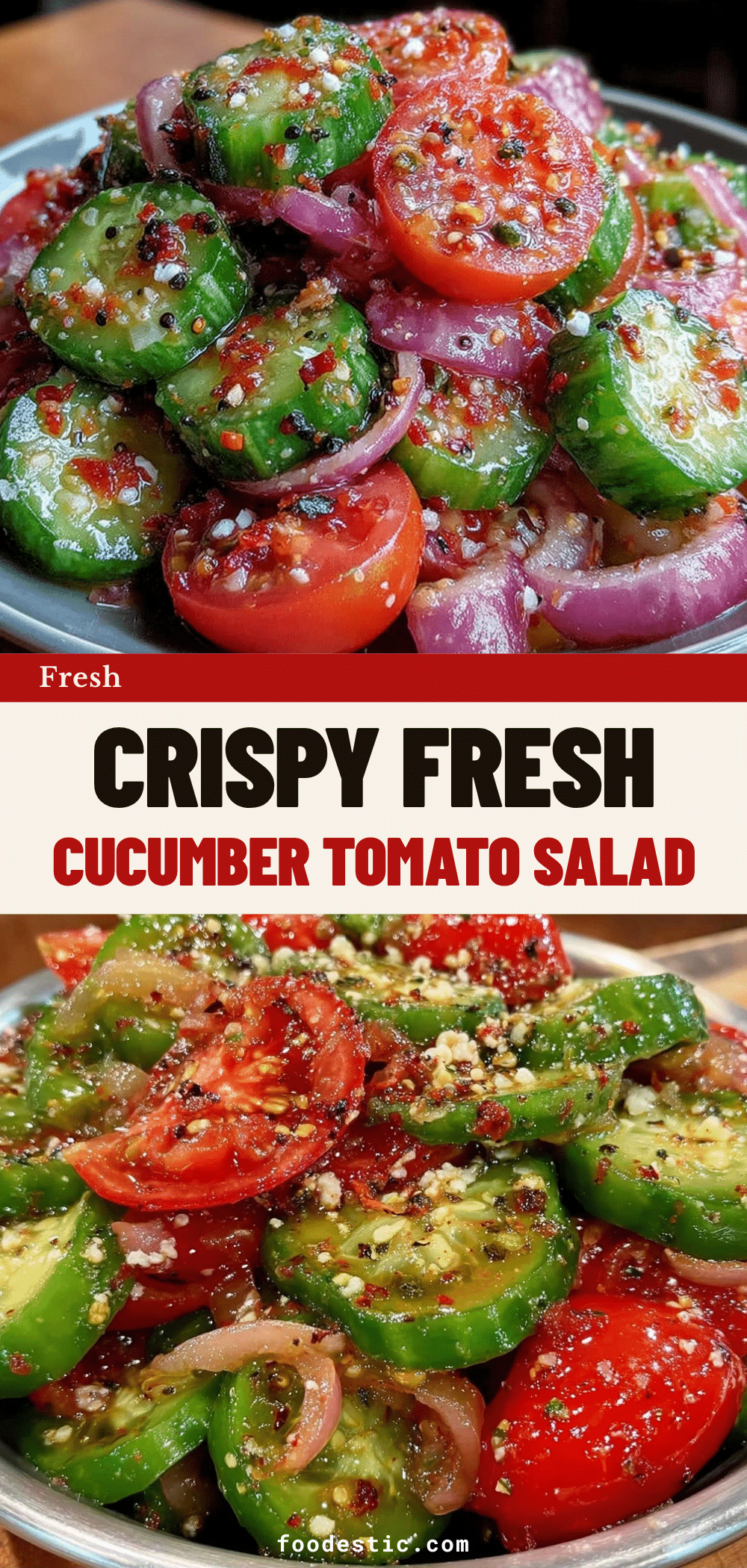
Cucumber Onion and Tomato Salad: 3-Ingredient Side
- Total Time: 15 minutes
- Yield: 4 servings 1x
Description
A refreshing, no-cook summer salad featuring crisp cucumbers, sweet red onions, and juicy tomatoes dressed in olive oil and lemon juice. This simple side dish is ready in under 15 minutes and serves as a perfect palate cleanser.
Ingredients
- 3 medium English cucumbers
- 1 medium red onion
- 4 medium ripe tomatoes (vine or beefsteak)
- 3 tablespoons extra virgin olive oil
- 2 tablespoons fresh lemon juice
- 1 teaspoon fine sea salt
- 1/2 teaspoon freshly cracked black pepper
- 2 tablespoons fresh mint or parsley (optional)
Instructions
- Wash and dry all vegetables. Trim cucumber ends; leave skin on for English cucumbers or peel if using regular cucumbers.
- Slice cucumbers into half-moons or thin rounds.
- Slice red onion into thin vertical slices. For milder flavor, soak in ice water for 5 minutes, then drain and pat dry.
- Core tomatoes and cut into wedges or chunks.
- In a large mixing bowl, combine cucumbers and red onions. Sprinkle with half the salt and toss gently. Let sit for 10 minutes to draw out moisture.
- Drain excess liquid from the bowl.
- Add tomatoes to the bowl.
- In a separate small bowl, whisk together olive oil, lemon juice, remaining salt, and black pepper until emulsified.
- Pour dressing over vegetables and gently toss to coat. Add fresh herbs if using.
- Cover and refrigerate for 10-15 minutes to allow flavors to meld.
- Taste and adjust seasoning if needed. Serve chilled or at room temperature.
Notes
To prevent the salad from becoming watery, salt the cucumbers and onions separately and drain the excess liquid before adding the tomatoes. Do not add the dressing until just before serving if making ahead. Do not freeze this salad as the high water content will ruin the texture upon thawing.
- Prep Time: 15 minutes
- Cook Time: 0 minutes
- Category: Side Dish
- Cuisine: Mediterranean
Nutrition
- Serving Size: 1 cup
- Calories: 120
- Sugar: 6
- Sodium: 350
- Fat: 9
- Saturated Fat: 1
- Carbohydrates: 10
- Fiber: 2
- Protein: 1
Keywords: cucumber salad, tomato salad, onion salad, summer salad, healthy side dish, vegan salad, gluten-free, quick recipes, no-cook salad, refreshing salad