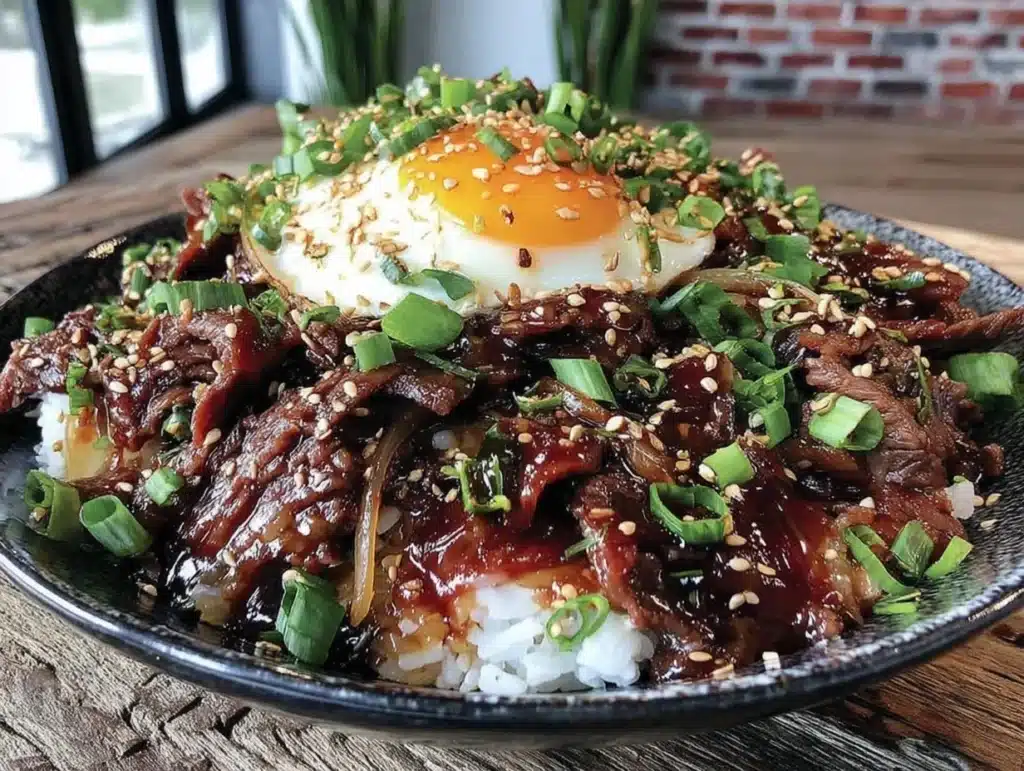
There is a specific kind of hunger that hits around 6:30 PM on a Tuesday. It’s not just hunger, it’s a deep, soulful craving for something warm, savory, and ready in under twenty minutes. I remember the first time I made this easy beef gyudon bowl, I was standing in my kitchen with a half-empty fridge and a head full of work emails. I didn’t have time to cook, but I definitely had time to eat. That night, I threw together sliced beef, onions, and a simple sauce, and within fifteen minutes, I had a steaming bowl of comfort that made the stress of the day melt away. Honestly, it was magic.
Since then, I’ve made this beef gyudon recipe probably fifty times. It has become my go-to anchor for busy weeknights when energy is low but appetite is high. You know how some recipes require you to marinate meat for hours or chop a mountain of vegetables? This one doesn’t. It relies on thin-sliced beef and a sweet-savory broth that cooks down into a glossy, rich sauce. The smell of soy sauce, mirin, and ginger filling the house is enough to make anyone’s day better. It’s fast, it’s affordable, and it tastes like it came from a high-end Japanese restaurant, but you’re making it in your pajamas.
What I love most about this beef gyudon is how forgiving it is. If you don’t have mirin, you can swap it out. If you’re out of green onions, skip them. The core flavors are so balanced that small changes don’t ruin the dish; they just make it yours. Plus, it’s incredibly satisfying without leaving you feeling heavy or sluggish afterward. It’s the kind of meal that fuels you for the rest of your evening chores or movie night. Let’s face it, we all need a reliable dinner that works when life gets chaotic. This bowl is that reliability. It’s hearty, it’s delicious, and it’s here to save your weeknight dinner plans.
Why You’ll Love This Recipe
After testing this recipe over a dozen times with different cuts of beef and sauce ratios, I can confidently say this is the best version I’ve ever created. It’s not just about speed; it’s about the depth of flavor you get in such a short amount of time. The secret lies in the technique of simmering the onions until they completely dissolve into the broth, creating a natural sweetness that balances the saltiness of the soy sauce. It’s a technique I learned from a local izakaya owner years ago, and it has never failed me. Here is why this beef gyudon deserves a permanent spot in your weekly rotation:
- Quick & Easy: From start to finish, this meal takes less than 20 minutes. That is perfect for those nights when you walk in the door and realize you forgot to defrost dinner. You can have it on the table before the pizza delivery guy even shows up.
- Simple Ingredients: You likely have most of these items in your pantry right now. Soy sauce, sugar, mirin, ginger, and beef. No fancy grocery trips needed. It uses pantry staples to deliver bold, restaurant-quality flavor without the fuss.
- Perfect for Busy Families: This is a great meal for picky eaters. The beef is tender, the onions are sweet, and the rice is comforting. Kids usually love it because it’s easy to eat with a fork or chopsticks, and adults love it because it’s not heavy.
- Crowd-Pleaser: I’ve served this to friends who are serious about Japanese cuisine, and they always ask for the recipe. It gets rave reviews from both kids and adults alike because it hits all the right flavor notes.
- Unbelievably Delicious: The texture and flavor combo is next-level comfort food. The beef soaks up the sauce, and the onions add a silky texture that makes every bite rich and satisfying.
This recipe isn’t just good; it is the kind that makes you close your eyes after the first bite. It’s comfort food reimagined—faster than takeout, but with the same soul-soothing satisfaction. It’s perfect for impressing guests without stress, or turning a simple meal into something memorable. It’s honest cooking, straight from the heart of my kitchen to yours.
What Ingredients You Will Need
This recipe uses simple, wholesome ingredients to deliver bold flavor and satisfying texture without the fuss. The beauty of gyudon is that it doesn’t require hard-to-find items. Most of these are pantry staples, but I do recommend a few specific choices for the best results. Here is what you need to gather before you start cooking.
- Thinly Sliced Beef: Look for beef labeled for shabu-shabu, sukiyaki, or Korean BBQ. It needs to be very thin so it cooks instantly. I recommend buying pre-sliced beef from the freezer section if your local store doesn’t carry fresh. (Adds richness, look for marbling).
- Yellow Onions: Use two medium-sized yellow onions. They are cheaper and sweeter when cooked down than white onions. (Use two medium onions, thinly sliced).
- Soy Sauce: Use a high-quality Japanese soy sauce like Kikkoman for a cleaner taste. Regular soy sauce works, but Japanese brands have less salt and more umami. (Adds saltiness and umami).
- Mirin: This is sweet rice wine that adds gloss and sweetness. If you can’t find it, you can use dry sherry plus a little extra sugar, but mirin is best. (Adds sweetness and gloss).
- Sake: Cooking sake removes the gaminess from the beef. If you don’t drink alcohol, you can skip it or use chicken broth. (Adds depth and removes odors).
- Sugar: Just a tablespoon to balance the salt. (Balances the saltiness).
- Fresh Ginger: Grated ginger is essential. Don’t use powder here; you need that fresh, zesty kick. (Adds warmth and aroma).
- Dashi Stock (Optional): Instant dashi granules add authentic seafood umami. If you skip it, use water or beef broth. (Adds authentic Japanese flavor).
- Kosher Salt: Just a pinch to season the onions before cooking. (Enhances onion sweetness).
- Sesame Oil: A drizzle at the end for nutty aroma. (Adds finishing aroma).
For the best texture, I personally prefer small-curd beef that is sliced paper-thin. Large chunks will toughen up too quickly. Also, if you are substituting for dietary needs, you can swap the beef for thinly sliced chicken or tofu for a vegetarian version, though the flavor profile will change slightly.
Equipment Needed
You don’t need a lot of fancy gear to make this beef gyudon. The most important tool is a heavy-bottomed pan or skillet. I use a 10-inch non-stick skillet because it heats evenly and prevents the sugar in the mirin from burning. A cast-iron skillet works too, but you have to watch the heat carefully.
You will also need a sharp knife for slicing the onions. If your onions are pre-sliced, great, but fresh slicing adds better texture. A microplane or fine grater is helpful for the ginger. If you don’t have one, mince it as finely as you can. Finally, a wooden spoon or spatula is all you need for stirring. No blenders or mixers here. Keep it simple. If you don’t have a non-stick pan, a well-seasoned carbon steel pan is a great budget-friendly alternative that lasts forever with proper care.
Preparation Method
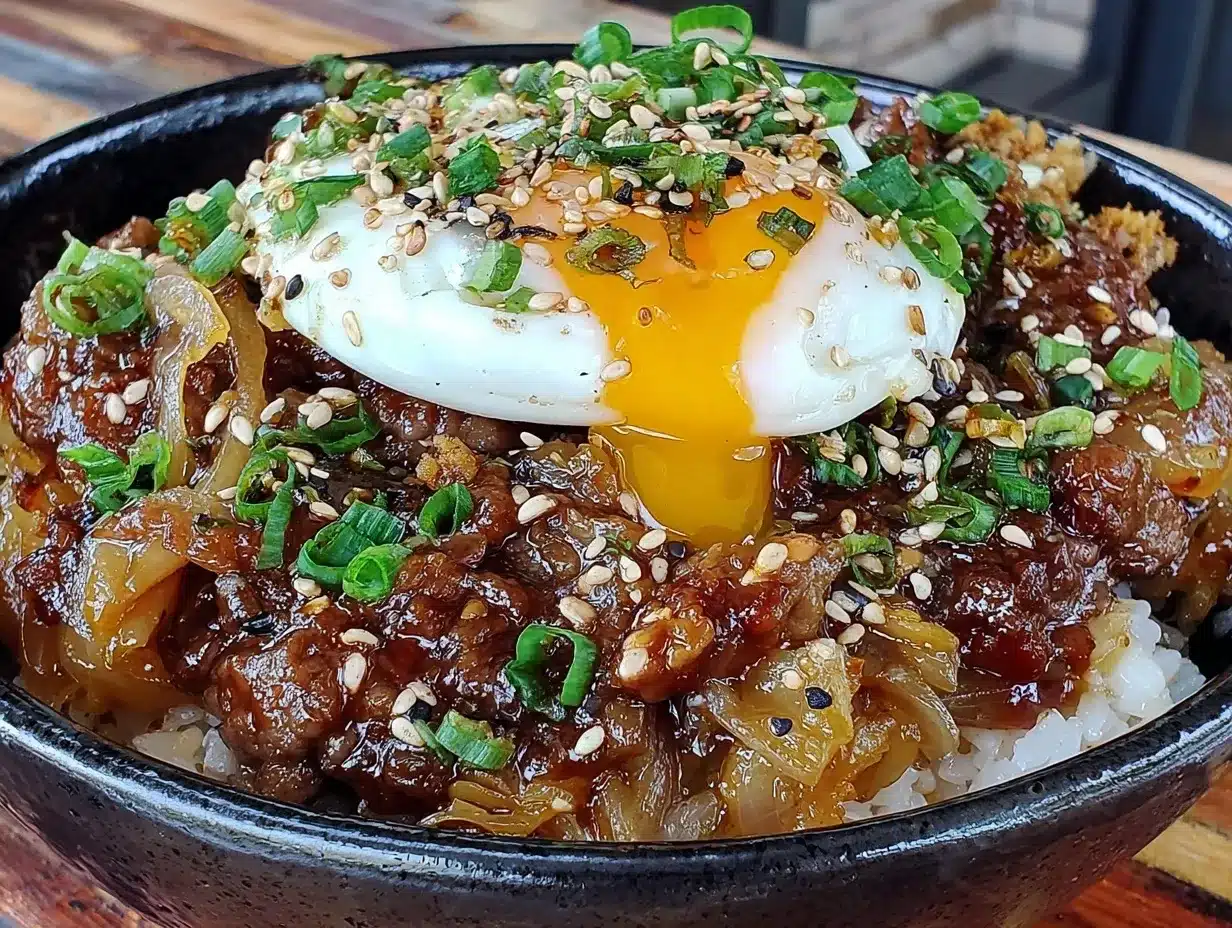
Making this beef gyudon is straightforward, but timing is everything. Here is how to get it right every time.
- Prepare the Beef (2 minutes): Take the thinly sliced beef out of the freezer or fridge. If it’s frozen solid, let it sit for five minutes so you can separate the slices. You want them loose, not stuck together. This takes no time at all.
- Prep the Onions (3 minutes): Peel the yellow onions and slice them in half from root to tip. Then, slice them thinly against the grain. You want thin strips, not chunks. Place them in a bowl. (Time: 3 minutes).
- Make the Sauce (1 minute): In a small bowl, whisk together the soy sauce, mirin, sake, sugar, and dashi granules (if using). Stir until the sugar is dissolved. Set this aside. (Time: 1 minute).
- Cook the Onions (5 minutes): Heat your skillet over medium heat. Add a tiny bit of oil if your pan is dry. Add the sliced onions and a pinch of salt. Cook them, stirring occasionally, until they are soft and translucent. This draws out the natural sugars. (Time: 5 minutes).
- Add the Sauce (2 minutes): Pour the sauce mixture over the onions. Add the grated ginger. Bring it to a gentle simmer. Let it bubble for about two minutes so the flavors meld together. The sauce will start to thicken slightly. (Time: 2 minutes).
- Cook the Beef (3 minutes): Turn the heat to medium-high. Lay the beef slices in a single layer over the onions. Do not stir immediately! Let the beef sear for about 30 seconds. Then, gently fold the beef into the sauce. Cook until the beef is just no longer pink. This happens very fast, usually within 2-3 minutes. Overcooking makes the beef tough. (Time: 3 minutes).
- Finish and Serve (1 minute): Turn off the heat. Drizzle with sesame oil if using. Serve immediately over hot steamed rice. Top with chopped green onions and maybe some narutomaki if you have it. (Time: 1 minute).
Total time: 17 minutes. It really is that fast.
Cooking Tips & Techniques
I’ve made plenty of mistakes with this recipe over the years, so you don’t have to. The biggest mistake people make is overcooking the beef. Because the slices are so thin, they cook in seconds. As soon as the color changes from red to brown, it’s done. If you keep cooking it, it will become chewy and dry. Trust your eyes, not the clock.
Another tip is to not stir the beef immediately when you add it to the pan. Letting it sit for a few seconds creates a nice sear and locks in flavor. Also, make sure your onions are cooked down enough before adding the beef. Raw onions have a sharp bite that doesn’t pair well with the sweet sauce. You want them sweet and melting. If you’re short on time, you can microwave the onions for two minutes first to soften them up. It’s a hack I use when I’m really rushed. It works surprisingly well.
Multitasking is key here. While the onions are cooking, start boiling your rice. Have your sauce whisked and ready before you even touch the beef. This recipe moves fast, so prep everything first. This is called mise en place, and it saves you from burning things. Also, taste the sauce before adding the beef. It should taste slightly too salty on its own because the beef and rice will balance it out. Adjust sugar or soy sauce to your preference.
Variations & Adaptations
This beef gyudon is a canvas for your creativity. Here are a few ways to change it up.
- Chicken Gyudon: Swap the beef for thinly sliced chicken thigh. Chicken takes a bit longer to cook, so simmer it in the sauce for an extra minute. It’s lighter and still delicious.
- Vegetarian Version: Use firm tofu or seitan instead of beef. Add some shiitake mushrooms for meaty texture. The sauce works perfectly with mushrooms.
- Spicy Kick: Add a teaspoon of gochujang (Korean chili paste) or red pepper flakes to the sauce. It adds a nice heat that cuts through the richness.
- Low-Carb Option: Serve over cauliflower rice instead of white rice. It’s a great way to keep the flavors without the carbs.
I once made this with pork belly instead of beef. It was incredibly rich and fatty, which was amazing for a cold winter night. If you want to reduce sodium, use low-sodium soy sauce and add a splash of water to the sauce mix. It’s very adaptable to your dietary needs.
Serving & Storage Suggestions
Serve this beef gyudon piping hot. The steam is part of the experience. I like to serve it in a deep bowl so the sauce pools at the bottom. Add a soft-boiled egg on top for extra protein and creaminess. Pickled ginger (beni shoga) on the side is a classic pairing that cleanses the palate.
If you have leftovers, store them in an airtight container in the fridge for up to three days. The beef might get a bit tough when reheated, so I recommend reheating it gently in a microwave with a splash of water to keep it moist. You can also freeze the sauce and onions without the beef for up to a month. Just thaw and reheat, then add fresh beef. The flavors actually get better after sitting for a day, so don’t be surprised if day-two gyudon tastes even more savory.
Nutritional Information & Benefits
This beef gyudon is a balanced meal. The beef provides high-quality protein and iron, which is great for energy. The onions offer fiber and vitamin C. The rice provides carbohydrates for fuel. While it does contain sodium from the soy sauce, you can control the amount by adjusting the recipe. It’s gluten-free if you use tamari instead of soy sauce. It’s dairy-free and naturally low in sugar if you reduce the mirin. It’s a wholesome, comforting meal that doesn’t weigh you down. I find it helps me stay full longer than lighter meals, which is perfect for busy evenings.
Conclusion
This easy beef gyudon bowl is more than just dinner; it’s a hug in a bowl. It’s fast, it’s flavorful, and it’s incredibly satisfying. I hope you try it on your next busy weeknight. Feel free to tweak the sauce to your liking and add your favorite toppings. I’d love to hear how you make it your own. Please leave a comment below and let me know what you thought. Share your photos on social media and tag me—I love seeing your creations. Thanks for cooking with me, and enjoy every bite.
Frequently Asked Questions
Can I use regular beef steak instead of thinly sliced beef?
It’s not recommended. Thick cuts will take too long to cook and become tough. If you must, slice the steak as thinly as possible against the grain. But for the best texture, buy pre-sliced beef meant for shabu-shabu.
What can I substitute for mirin?
If you don’t have mirin, you can use dry sherry mixed with a little sugar. Or, use white wine with a pinch of sugar. The key is to add some sweetness to balance the soy sauce.
Is beef gyudon healthy?
It can be. It’s high in protein and iron. To make it healthier, use low-sodium soy sauce, add more vegetables like spinach or mushrooms, and control the portion of rice. It’s a balanced meal when prepared mindfully.
Can I make this in a slow cooker?
Not really. The beef needs to cook quickly to stay tender. A slow cooker will make the beef tough and stringy. It’s best made in a skillet on the stovetop.
What sides go well with beef gyudon?
Simple sides work best. Miso soup, pickled vegetables, or a simple cucumber salad with vinegar are perfect companions. They add crunch and acidity to balance the rich beef.
Pin This Recipe!
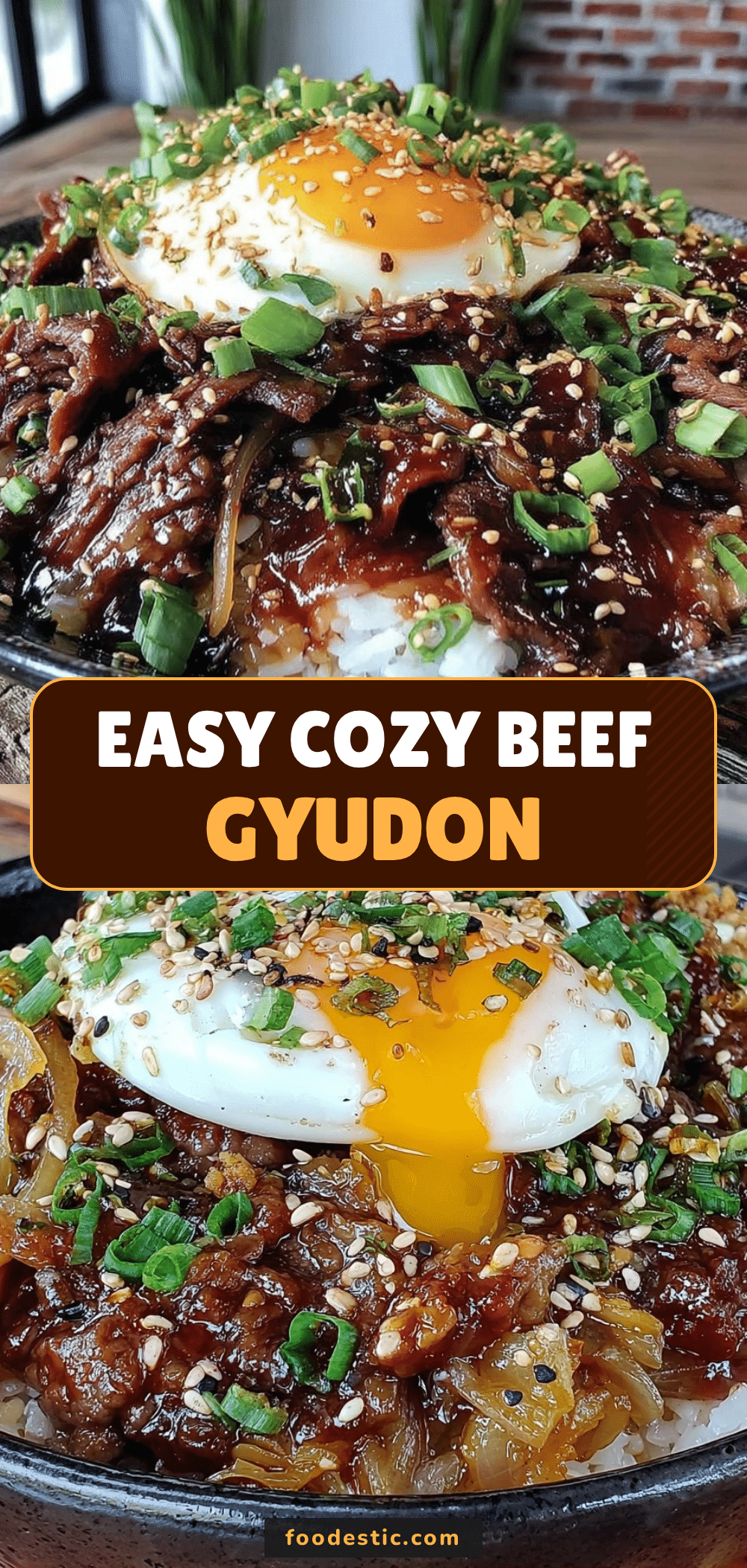

Easy Beef Gyudon Bowl: Perfect Weeknight Dinner
- Total Time: 17 minutes
- Yield: 2 servings 1x
Description
A quick and savory Japanese beef bowl that comes together in under 20 minutes. Thinly sliced beef is simmered with sweet onions and a rich soy-mirin sauce, served over steamed rice for a comforting weeknight meal.
Ingredients
- 1 lb thinly sliced beef (for shabu-shabu, sukiyaki, or Korean BBQ)
- 2 medium yellow onions, thinly sliced
- 1/4 cup soy sauce (Japanese brand like Kikkoman recommended)
- 2 tbsp mirin
- 2 tbsp sake
- 1 tbsp sugar
- 1 tsp fresh ginger, grated
- 1 tsp dashi stock granules (optional)
- Pinch of kosher salt
- 1 tsp sesame oil (for finishing)
- Steamed rice for serving
- Chopped green onions for garnish
Instructions
- Prepare the beef by letting it sit for 5 minutes if frozen to separate slices.
- Slice the yellow onions thinly against the grain.
- In a small bowl, whisk together soy sauce, mirin, sake, sugar, and dashi granules until sugar is dissolved.
- Heat a heavy-bottomed skillet over medium heat. Add onions and a pinch of salt, cooking until soft and translucent (about 5 minutes).
- Pour the sauce mixture over the onions and add grated ginger. Simmer for 2 minutes to meld flavors.
- Increase heat to medium-high. Lay beef slices in a single layer over onions. Let sear for 30 seconds, then gently fold into sauce. Cook until beef is just no longer pink (2-3 minutes).
- Turn off heat, drizzle with sesame oil, and serve immediately over hot steamed rice topped with green onions.
Notes
Do not overcook the beef as thin slices become tough quickly. Let the beef sear briefly before folding to lock in flavor. Ensure onions are fully softened and sweet before adding beef. If substituting mirin, use dry sherry with extra sugar. For a vegetarian version, swap beef for firm tofu or seitan.
- Prep Time: 6 minutes
- Cook Time: 11 minutes
- Category: Main Course
- Cuisine: Japanese
Nutrition
- Serving Size: 1 bowl with rice and
- Calories: 450
- Sugar: 12
- Sodium: 900
- Fat: 18
- Saturated Fat: 7
- Carbohydrates: 35
- Fiber: 3
- Protein: 32
Keywords: beef gyudon, japanese beef bowl, quick weeknight dinner, easy beef recipe, shabu shabu beef, comfort food, 20 minute meals