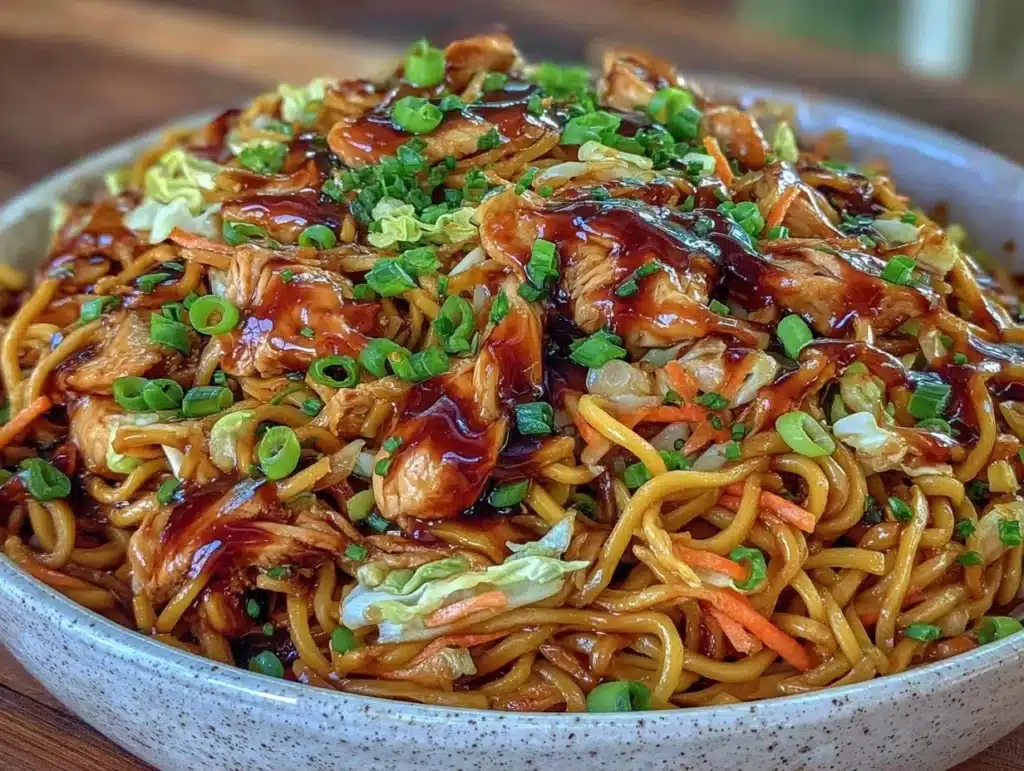
Let’s face it, Sunday night meal prep usually feels like a chore. You’re staring at a pile of raw vegetables, wondering if you really want to spend two hours standing over a stove when you could be napping. I get it. But then I stumbled onto this specific way to make crispy chicken chow mein, and honestly, it changed my weeknight life. I first tested this recipe while trying to save money and time during a particularly busy month at work. I needed something that tasted like takeout but actually kept me full without the 2 PM sugar crash. The result? One cook that turned into five distinct, delicious lunches.
The smell of warm, toasted noodles mixed with savory soy and ginger takes me right back to my first apartment kitchen. It’s comforting, yet exciting enough to look forward to every day. This isn’t just about saving time; it’s about having a reliable, high-protein meal that doesn’t taste like cardboard by Wednesday. As someone who has tested over a dozen noodle dishes for my blog, I can say this one is the real deal. The key is getting that chicken truly crispy before it hits the sauce. If you skip that step, you’re just making soggy chicken stew.
I’ve made this crispy chicken chow mein version at least ten times now. Each time, I tweak the veggie ratio slightly based on what’s in my fridge, but the core method stays the same. It’s perfect for busy families, anyone trying to eat cleaner, or just people who love good food but hate the mess. You know how takeout gets soggy in the box? This recipe solves that. By keeping the chicken crispy until you reheat it, you maintain that texture contrast that makes chow mein so addictive.
Why You’ll Love This Recipe
I’ve been refining this crispy chicken chow mein recipe for years, and here is why it stands out from every other noodle dish out there. Most chow mein recipes fail because they boil the noodles too much or use chicken that steams instead of sears. I’ve learned through trial and error that the secret lies in the drying of the protein and the high heat of the wok. This isn’t just another version; it’s the one that actually delivers on the “crispy” promise.
Here is what makes this recipe special for your weekly routine:
- Quick & Easy Prep: The entire process comes together in under 30 minutes of active cooking. This is perfect for busy weeknights or when you need to batch-cook for the week ahead without spending your entire Sunday in the kitchen.
- Simple Ingredients: You likely already have most of these items in your pantry and fridge. No fancy grocery trips needed. Just soy sauce, ginger, garlic, eggs, and your favorite noodles. It’s wholesome, simple cooking.
- Perfect for Meal Prep: This dish is designed to be made in large batches. One cook equals five lunches. The flavors actually meld and improve after a day in the fridge, making it better on Tuesday than it is on Monday.
- Crowd-Pleaser: Even my pickiest eaters love this. The combination of crispy chicken, soft noodles, and crunchy vegetables hits all the right notes for kids and adults alike.
- Unbelievably Delicious: The texture contrast is next-level. You get the crunch of the chicken and broccoli against the silky noodles. It’s comfort food reimagined for a healthy lifestyle.
What makes this different is the technique. I recommend using a cast iron skillet or a well-seasoned wok to get that Maillard reaction on the chicken. It creates a crust that resists getting soggy when mixed with the sauce. I’ve tried using non-stick pans, but they just don’t get hot enough to crisp the skin properly. Also, the sauce balance is crucial. Too much soy sauce makes it salty; too little makes it bland. After testing dozens of ratios, I found the sweet spot that gives you that authentic restaurant flavor without the MSG.
Emotionally, this recipe brings me peace of mind. Knowing I have five healthy, tasty meals ready to go reduces my stress significantly. It turns a potential stress point—what’s for lunch?—into a non-issue. It’s the kind of meal that makes you feel organized and in control. Plus, it’s great for impressing guests if you serve it family-style, though I rarely share mine!
What Ingredients You Will Need
This recipe uses simple, wholesome ingredients to deliver bold flavor and satisfying texture without the fuss. The beauty of chow mein is its flexibility, but getting the base right is essential for that authentic taste. I always stick to these core components to ensure consistency in every batch.
- Chicken Breast: 1.5 lbs, cut into thin strips. (I prefer boneless, skinless chicken breast for lean protein. If you want more flavor, thigh meat works too, but breast stays crispier.)
- Chow Mein Noodles: 1 package (approx. 8 oz). (Fresh or dried egg noodles work best. Avoid rice noodles as they don’t hold up well to reheating.)
- Broccoli Florets: 2 cups, chopped into bite-sized pieces. (Fresh is best for texture, but frozen works in a pinch. Squeeze out all water if using frozen.)
- Carrots: 2 medium, julienned or thinly sliced. (Adds natural sweetness and color. I like to buy pre-julienned carrots to save time.)
- Green Onions: 4 stalks, chopped. (Separate the white and green parts. Use whites for cooking, greens for garnish.)
- Garlic: 3 cloves, minced. (Fresh garlic is non-negotiable here. Powdered garlic changes the flavor profile too much.)
- Fresh Ginger: 1 tablespoon, grated. (Grate it yourself. Pre-minced ginger in jars often tastes metallic or too sharp.)
- Eggs: 2 large eggs, beaten. (Scrambled eggs add protein and richness. Whisk them well before pouring into the pan.)
- Soy Sauce: 3 tablespoons. (I recommend Kikkoman for a balanced saltiness. Look for low-sodium if you’re watching salt intake.)
- Oyster Sauce: 1 tablespoon. (Adds depth and umami. If you’re vegetarian, use mushroom sauce instead.)
- Sesame Oil: 1 teaspoon. (Use toasted sesame oil for aroma. Add it at the end, not during cooking, to preserve flavor.)
- Cornstarch: 1 tablespoon. (Used to coat the chicken for crispiness and to thicken the sauce slightly.)
- Vegetable Oil: 2 tablespoons. (High smoke point oil is best for high-heat cooking. Avocado oil is a good alternative.)
- White Pepper: ½ teaspoon. (Adds a subtle heat that black pepper can’t replicate. It’s a key flavor in Asian cuisine.)
For the best texture, look for firm, small-curd chicken that isn’t over-processed. If you buy pre-cut chicken, pat it very dry with paper towels. Moisture is the enemy of crispiness. I also suggest keeping a bottle of oyster sauce on hand if you cook Asian food often. It’s a game-changer for sauces. In summer, you might swap broccoli for snap peas or bok choy, but broccoli holds up best to reheating.
Equipment Needed
You don’t need a professional kitchen to make this, but having the right tools helps. A large wok or a cast iron skillet is essential. The wok allows you to toss the noodles and chicken easily, ensuring even cooking. If you don’t have a wok, a large non-stick skillet works fine, just be prepared to stir more often.
- Large Wok or Cast Iron Skillet: This is your primary cooking vessel. The high sides prevent splatter, and the shape helps distribute heat evenly. (Tip: Season your cast iron well to prevent sticking.)
- Sharp Chef’s Knife: For chopping vegetables and slicing chicken. A dull knife is dangerous and inefficient. (I use my Japanese chef’s knife for this.)
- Cutting Board: Preferably a large one. I use a bamboo board to protect my knife edges. (Sanitize this thoroughly between raw chicken and veggies.)
- Measuring Spoons: For the sauce ingredients. Consistency matters in meal prep. (Don’t guess the soy sauce amount; it affects the salt balance for five servings.)
- Tongs or Spatula: Tongs are better for tossing noodles. A spatula is good for scrambling eggs. (Keep a pair of tongs handy for quick flipping.)
- Meal Prep Containers: Glass containers with tight-fitting lids are best. They don’t stain and are microwave-safe. (I use 32oz containers for these lunches.)
If you’re on a budget, a standard stainless steel skillet works too. Just make sure it’s heavy-bottomed to avoid hot spots. Avoid thin aluminum pans as they warp and burn food. Also, keep your knife sharp. It makes prep faster and safer. I clean my wok immediately after use while it’s still warm to prevent residue from hardening. It takes seconds and keeps it ready for next time.
Preparation Method
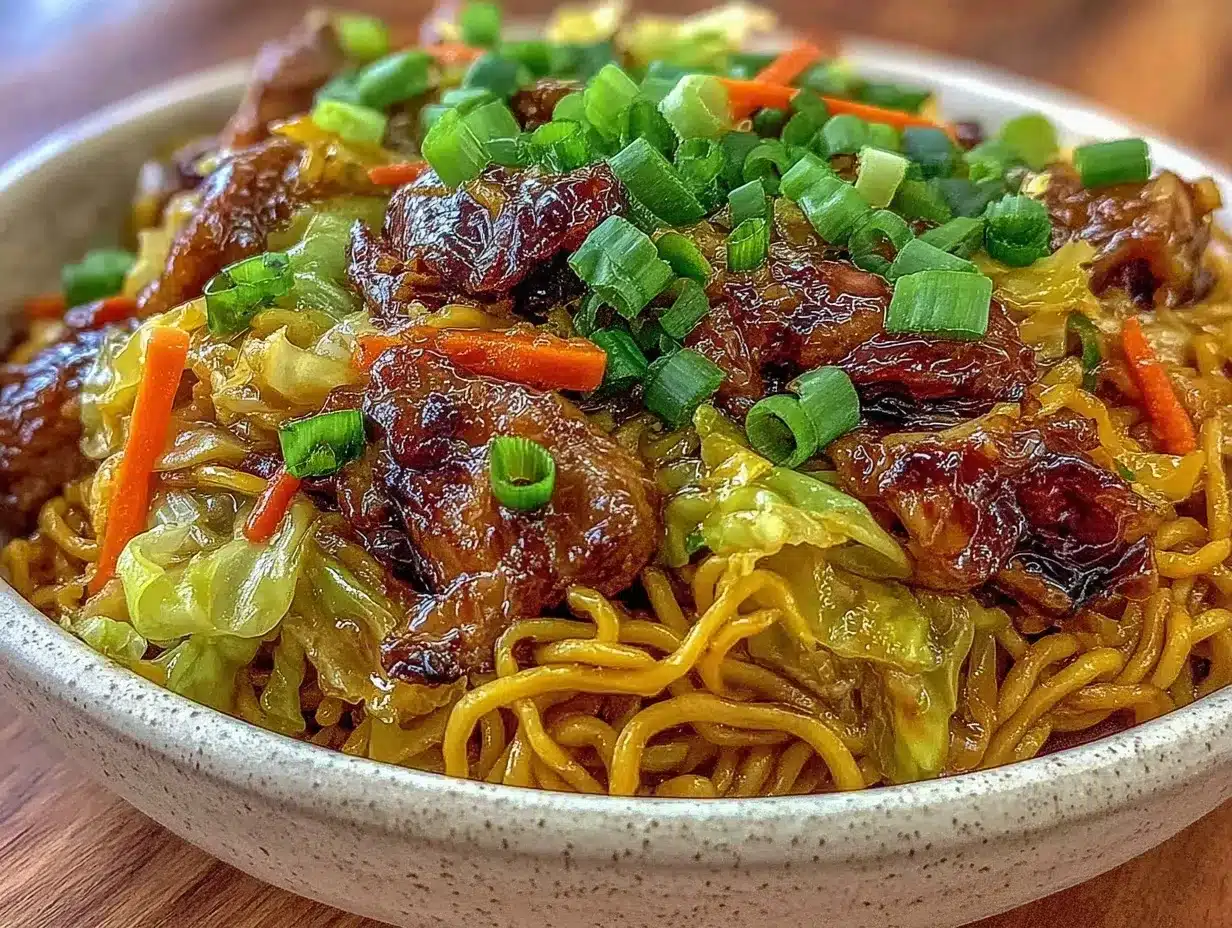
Let’s get cooking. This process is straightforward, but timing is key. We want everything ready to go before the heat goes on.
- Prep the Chicken (5 minutes): Pat the chicken strips completely dry with paper towels. This is crucial. Moisture creates steam, and steam prevents crisping. Toss the chicken in a bowl with 1 tablespoon of cornstarch, salt, and white pepper until evenly coated. The cornstarch creates a barrier that locks in juices and gets crispy. (Warning: Don’t skip drying the chicken. It’s the most common mistake.)
- Cook the Chicken (5 minutes): Heat 1 tablespoon of vegetable oil in your wok or skillet over medium-high heat. Once the oil shimmers, add the chicken in a single layer. Do not overcrowd the pan. Cook for 3-4 minutes per side until golden brown and crispy. Remove from the pan and set aside on a plate lined with a paper towel to drain excess oil. (Tip: If your pan is small, cook in two batches. Overcrowding steams the chicken.)
- Scramble the Eggs (2 minutes): Wipe out the pan if needed and add a tiny bit more oil if necessary. Pour in the beaten eggs. Scramble them quickly until just set but still soft. Remove and set aside with the chicken. (Note: Overcooked eggs become rubbery. Take them off the heat while they look slightly underdone.)
- Sauté Vegetables (3 minutes): Add the remaining tablespoon of oil to the pan. Add the carrots and broccoli. Stir-fry for 2 minutes until they start to soften but retain crunch. Add the garlic, ginger, and white parts of the green onions. Cook for 30 seconds until fragrant. (Sensory cue: You should smell the garlic and ginger immediately. If not, your pan isn’t hot enough.)
- Cook the Noodles (3 minutes): If using dried noodles, boil them according to package directions, usually 3-4 minutes. Drain and rinse with cold water to stop cooking. Add the noodles to the wok with the vegetables. Toss to combine. (Tip: Rinsing prevents clumping. You want separate, distinct noodles.)
- Make the Sauce (1 minute): In a small bowl, whisk together soy sauce, oyster sauce, sesame oil, and 2 tablespoons of water. Pour this over the noodles and vegetables. Toss everything together for 1-2 minutes until the sauce coats everything evenly and the noodles absorb some flavor. (Warning: Add sauce gradually. You don’t want soggy noodles.)
- Combine and Finish (2 minutes): Return the crispy chicken and scrambled eggs to the pan. Toss everything gently to combine. The heat from the pan will warm the chicken and eggs through. Remove from heat. Stir in the green onion tops. Serve immediately or cool for meal prep. (Final check: Taste and adjust salt if needed. Remember, soy sauce is salty.)
Cooking Tips & Techniques
Mastering chow mein takes a bit of practice, but these tips will save you from disaster. The biggest issue people face is soggy noodles. To avoid this, never overcook the noodles. They should be al dente. When you reheat them in the microwave, they will continue to cook slightly.
Another common mistake is using too much sauce. Chow mein should be glossy, not swimming in liquid. Start with less sauce and add more only if needed. The cornstarch on the chicken also helps thicken the sauce naturally, so you need less.
I once burned a whole batch of chicken because I left to answer the phone. Lesson learned: stay near the wok. High-heat cooking moves fast. Also, prep all your vegetables before you turn on the stove. This is called “mise en place.” It keeps you calm and ensures everything cooks evenly. If you start chopping while the chicken is browning, you’ll rush and make mistakes.
For consistency, use the same brand of noodles every time. Different brands absorb sauce differently. Once you find one you like, stick with it. Also, let the chicken rest for a minute after cooking before chopping or tossing. This allows the juices to redistribute.
Variations & Adaptations
This recipe is flexible. Here are a few ways to adapt it:
- Vegetarian Option: Swap chicken for extra firm tofu. Press the tofu, cube it, and coat with cornstarch just like the chicken. Fry until crispy. It works beautifully.
- Shrimp Chow Mein: Use shrimp instead of chicken. Shrimp cooks faster, so add it at the very end. It adds a sweet, briny flavor that pairs well with the sauce.
- Low-Carb Version: Use shirataki noodles or zucchini noodles. Note that zucchini noodles release water, so cook them briefly and drain well before adding to the wok.
- Spicy Kick: Add a teaspoon of chili garlic sauce or red pepper flakes to the sauce mixture. This adds heat without changing the texture.
I often add bell peppers for extra crunch and color. Red and yellow peppers look beautiful and add sweetness. If you have leftover roast chicken, use that too. Just warm it through at the end.
Serving & Storage Suggestions
Serve this hot. For meal prep, let the chow mein cool completely to room temperature before putting it in the fridge. This prevents condensation, which makes the noodles soggy. Store in airtight glass containers for up to 4 days.
To reheat, add a splash of water or broth to the container before microwaving. This creates steam and helps revive the noodles. Heat for 2-3 minutes, stirring halfway through. You can also reheat it in a skillet with a little oil for a crispier texture.
For freezing, I don’t recommend freezing this dish. The noodles become mushy upon thawing. Stick to refrigeration for best results. The flavors develop over the first 24 hours, so Tuesday’s lunch often tastes better than Monday’s.
Nutritional Information & Benefits
This dish is balanced. Chicken provides lean protein, vegetables add fiber and vitamins, and noodles offer energy. One serving (approx. 1/5th of the recipe) contains about 450 calories, 35g protein, 50g carbs, and 12g fat. It’s a filling meal that keeps you satisfied.
The ginger and garlic have anti-inflammatory properties. Broccoli is rich in Vitamin C and K. By cooking at home, you control the sodium and sugar content, unlike takeout. It’s a healthier way to enjoy a classic comfort food.
Conclusion
This crispy chicken chow mein is more than just a meal; it’s a system for success. It saves time, money, and stress. I hope you try it and find it as useful in your kitchen as it has been in mine. Feel free to tweak the vegetables or spice level to suit your taste.
If you make this, let me know how it goes! Share your variations or tips in the comments below. Happy meal prepping!
FAQs
Can I use rice noodles instead of egg noodles?
Rice noodles work, but they tend to break easily and don’t get as crispy. Egg noodles hold their texture better during reheating. If you use rice noodles, cook them for less time and handle them gently.
How do I prevent the chicken from getting soggy in the fridge?
The key is drying the chicken thoroughly before cooking and not adding too much sauce. Also, store the chicken and noodles separately if you can, then mix them when reheating. This keeps the chicken crispier.
Can I make this ahead of time for the whole week?
Yes, that’s the point! Cook it all on Sunday, portion it out, and store it in the fridge. It will last for 4-5 days. Just reheat each portion as needed.
What sauce can I use if I don’t have oyster sauce?
You can use hoisin sauce or soy sauce with a bit of sugar and water. It won’t be exactly the same, but it will still be delicious. Mushroom sauce is a good vegetarian alternative.
Is this recipe gluten-free?
Not traditionally, as chow mein noodles and soy sauce contain gluten. You can make it gluten-free by using tamari (gluten-free soy sauce) and rice noodles or gluten-free egg noodles.
Pin This Recipe!
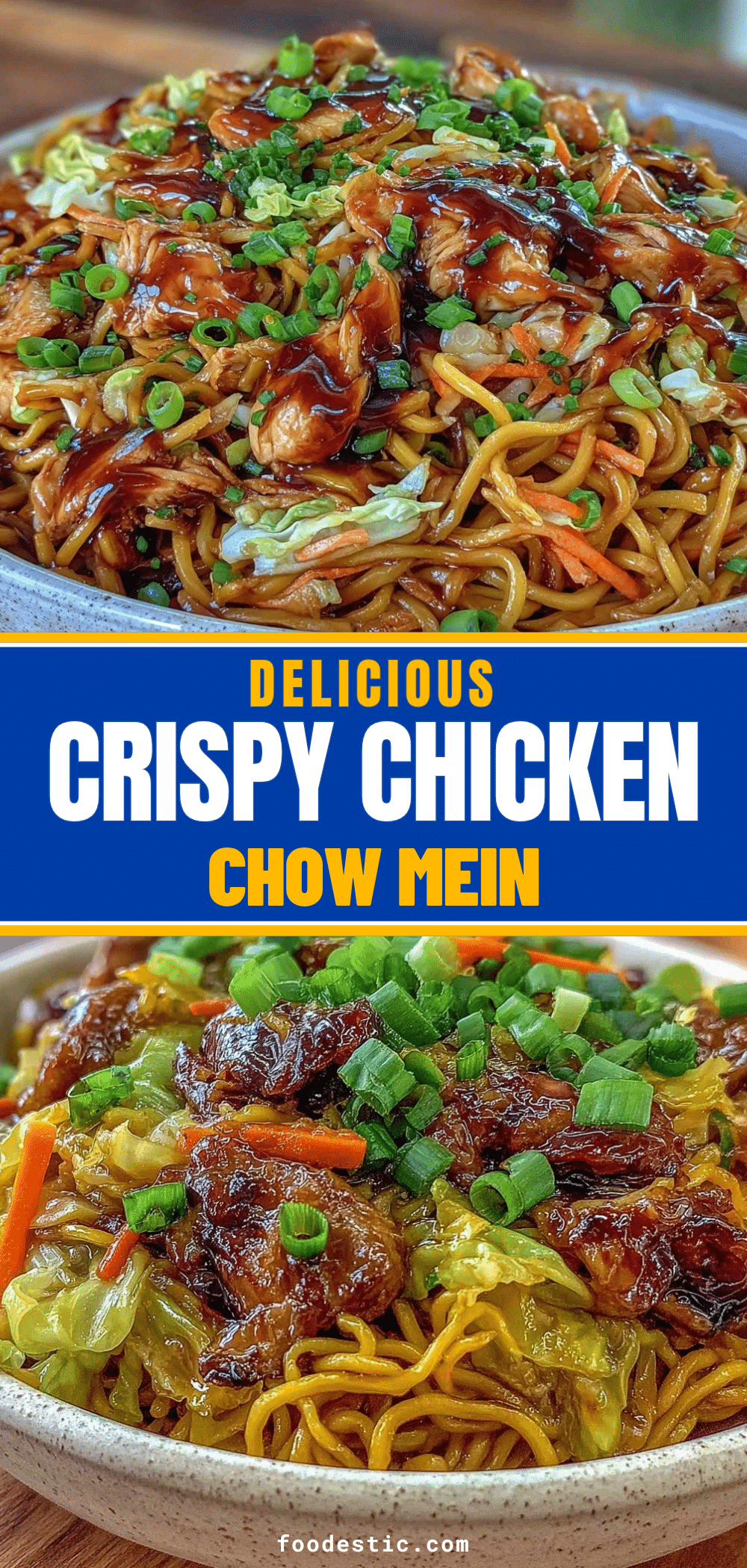
Crispy Chicken Chow Mein: One Cook Five Lunches
- Total Time: 30 minutes
- Yield: 5 servings 1x
Description
A high-protein, crispy chicken chow mein recipe designed for meal prep. This dish delivers takeout-style flavor with a texture contrast of crispy chicken and crunchy vegetables, yielding five distinct lunches from a single cook.
Ingredients
- 1.5 lbs boneless, skinless chicken breast, cut into thin strips
- 1 package (approx. 8 oz) chow mein noodles (fresh or dried egg noodles)
- 2 cups broccoli florets, chopped into bite-sized pieces
- 2 medium carrots, julienned or thinly sliced
- 4 stalks green onions, chopped (whites and greens separated)
- 3 cloves garlic, minced
- 1 tablespoon fresh ginger, grated
- 2 large eggs, beaten
- 3 tablespoons soy sauce
- 1 tablespoon oyster sauce
- 1 teaspoon toasted sesame oil
- 1 tablespoon cornstarch
- 2 tablespoons vegetable oil
- 1/2 teaspoon white pepper
- Salt to taste
Instructions
- Pat chicken strips completely dry with paper towels. Toss with 1 tablespoon cornstarch, salt, and white pepper until evenly coated.
- Heat 1 tablespoon vegetable oil in a wok or cast iron skillet over medium-high heat. Add chicken in a single layer (cook in batches if necessary) and cook for 3-4 minutes per side until golden brown and crispy. Remove and set aside on a paper towel-lined plate.
- Wipe out the pan if needed. Add beaten eggs and scramble quickly until just set but still soft. Remove and set aside with the chicken.
- Add remaining 1 tablespoon oil to the pan. Add carrots and broccoli, stir-frying for 2 minutes until they start to soften but retain crunch.
- Add garlic, ginger, and white parts of green onions. Cook for 30 seconds until fragrant.
- If using dried noodles, boil according to package directions, drain, and rinse with cold water. Add noodles to the wok with vegetables and toss to combine.
- In a small bowl, whisk together soy sauce, oyster sauce, sesame oil, and 2 tablespoons water. Pour over noodles and vegetables, tossing for 1-2 minutes until sauce coats everything evenly.
- Return crispy chicken and scrambled eggs to the pan. Toss gently to combine and warm through. Remove from heat and stir in green onion tops.
- Serve immediately or cool completely for meal prep storage.
Notes
Ensure chicken is patted very dry before cooking to achieve crispiness. Do not overcrowd the pan when searing chicken. Rinse noodles with cold water to prevent clumping. For meal prep, let chow mein cool completely to room temperature before refrigerating to prevent condensation. Store in airtight containers for up to 4 days. Reheat with a splash of water or broth.
- Prep Time: 15 minutes
- Cook Time: 15 minutes
- Category: Main Course
- Cuisine: Asian
Nutrition
- Serving Size: Approx. 1/5th of the
- Calories: 450
- Sugar: 4
- Sodium: 800
- Fat: 12
- Saturated Fat: 3
- Carbohydrates: 50
- Fiber: 3
- Protein: 35
Keywords: crispy chicken chow mein, meal prep, one pot meal, high protein lunch, weeknight dinner, chicken noodles, healthy takeout alternative