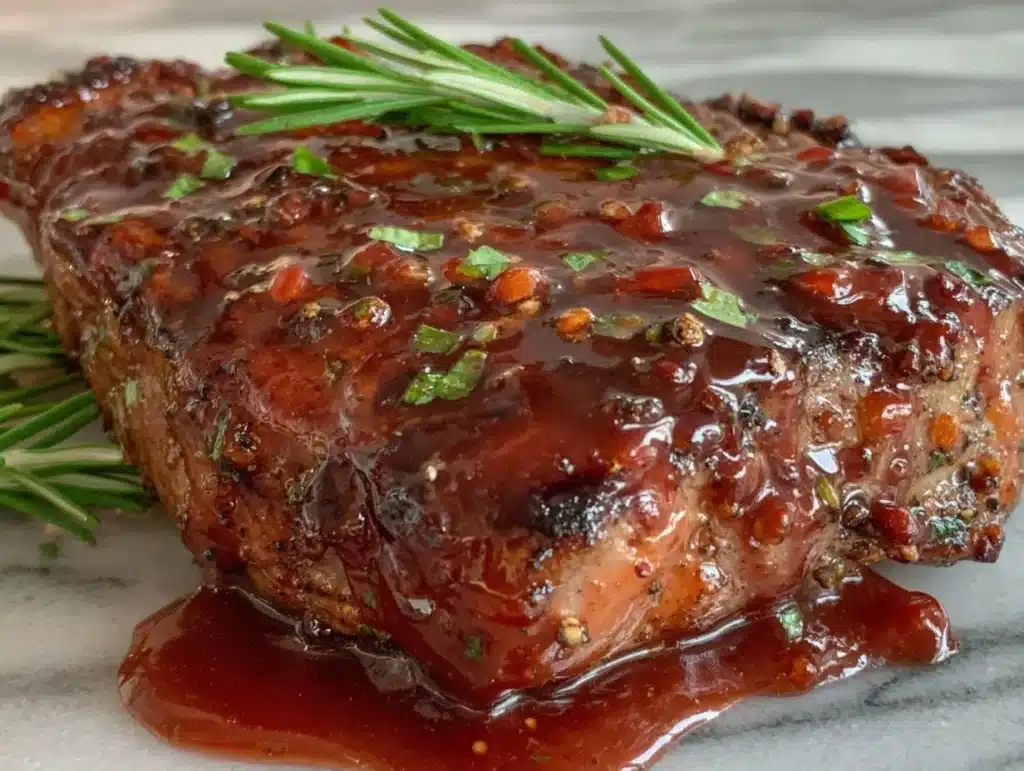
Let’s be honest, the smell of a perfectly reduced red wine sauce hitting a hot pan is enough to make anyone stop what they are doing and stare at the stove. It’s that deep, earthy aroma that instantly transports you to a cozy bistro in Paris or a high-end steakhouse in New York. I remember the first time I tried to make this sauce myself, I was trying to impress a date who happens to be a bit of a food snob. I burned the shallots, over-reduced the wine, and ended up with a bitter, gloopy mess that tasted more like regret than dinner.
That failure taught me more than any cookbook ever could. It taught me that patience is the main ingredient, not just the wine. Now, after making this rich red wine reduction sauce dozens of times, I’ve perfected a method that takes less time than you think but delivers maximum flavor. It’s not about fancy techniques; it’s about understanding how the liquids interact. This sauce is the ultimate shortcut for elevating simple weeknight meals without spending hours in the kitchen.
Whether you are cooking a tough cut of chuck roast that needs tenderizing or just want to turn a plain grilled chicken breast into something special, this sauce is your best friend. It’s versatile, forgiving, and surprisingly easy to master. You don’t need a degree in culinary arts to pull this off. You just need a few pantry staples and a willingness to let the wine do its magic. Once you taste the depth it adds to your meal, you’ll wonder why you ever settled for store-bought gravies.
Why You’ll Love This Recipe
I’ve tested this rich red wine reduction sauce through every season, from light summer grilling to heavy winter stews, and it remains a staple in my rotation. The reason it works so well is that it balances acidity, sweetness, and savory notes in a way that feels intentional but happens naturally. It’s not just a condiment; it’s a flavor bomb that ties the whole plate together. Here is why this specific version stands out from the crowd:
- Quick & Easy: While the wine reduces, you can prep your protein or chop vegetables. The active time is minimal, making it perfect for busy weeknights when you want to eat well but don’t want to be chained to the stove.
- Simple Ingredients: You likely already have most of these items in your kitchen. Red wine, butter, shallots, and beef broth are common staples. No trips to specialty stores are needed.
- Perfect for Date Night: If you want to feel fancy without the stress, this sauce makes even the simplest meal look and taste like it came from a chef. It adds an instant layer of sophistication.
- Crowd-Pleaser: Adults love the depth of flavor, and it pairs beautifully with almost any meat. It’s a versatile sauce that rarely gets complaints.
- Unbelievably Delicious: The texture is silky and smooth, coating every bite. The flavor is complex, with hints of fruit, tannins, and savory umami that linger pleasantly.
What makes this recipe different is the emphasis on building layers. Many people just boil wine and butter together, which results in a one-dimensional taste. By starting with shallots and deglazing properly, you create a foundation of flavor that the wine then builds upon. It’s a technique that respects the ingredients and rewards you with a sauce that feels soul-soothing and deeply satisfying.
What Ingredients You Will Need
This recipe relies on high-quality basics to deliver bold flavor without the fuss. The beauty of a rich red wine reduction sauce lies in how these simple components transform through heat and time. You don’t need obscure spices or hard-to-find items. Just focus on fresh aromatics and a wine you would actually drink.
- Red Wine: You need about 1 cup of dry red wine. Cabernet Sauvignon or Merlot work best because they have enough body and tannins to stand up to the reduction. Avoid cooking wines, as they are often too salty. I recommend a mid-range bottle; if it’s not good enough to sip, it’s not good enough for cooking.
- Shallots: Use 2 medium shallots, finely minced. Shallots offer a milder, sweeter onion flavor that blends seamlessly into the sauce. They are essential for that aromatic base.
- Beef Broth: 1/2 cup of low-sodium beef broth adds body and savory depth. Look for a brand with no artificial additives. Low sodium is crucial so you can control the final salt level.
- Unsalted Butter: 2 tablespoons of cold, cubed unsalted butter. This is added at the very end to emulsify the sauce, giving it that glossy, restaurant-quality finish.
- Fresh Thyme: 2-3 sprigs of fresh thyme. The earthy, lemony notes of thyme complement red wine beautifully. Dried thyme can be used in a pinch, but fresh is superior.
- Garlic: 1 clove of garlic, minced. Just a touch to add pungency without overpowering the wine.
- Black Pepper: Freshly cracked black pepper to taste. Always use fresh cracked for the best bite.
- Salt: Kosher salt, added sparingly at the end. Taste before adding, as the broth and wine may already have some salt content.
- Optional: A pinch of sugar: If your wine is very acidic, a tiny pinch of sugar can help balance the flavors.
For the best texture, look for a wine with moderate alcohol content. Very high alcohol wines can become bitter when reduced. Also, ensure your shallots are finely minced so they cook down completely and disappear into the sauce, leaving no large chunks.
Do I need a specific type of pan?
A non-stick skillet or a stainless steel pan works best. Stainless steel is great for deglazing because the browned bits (fond) stick well, but non-stick is easier for cleanup if you are worried about sticking.
Equipment Needed
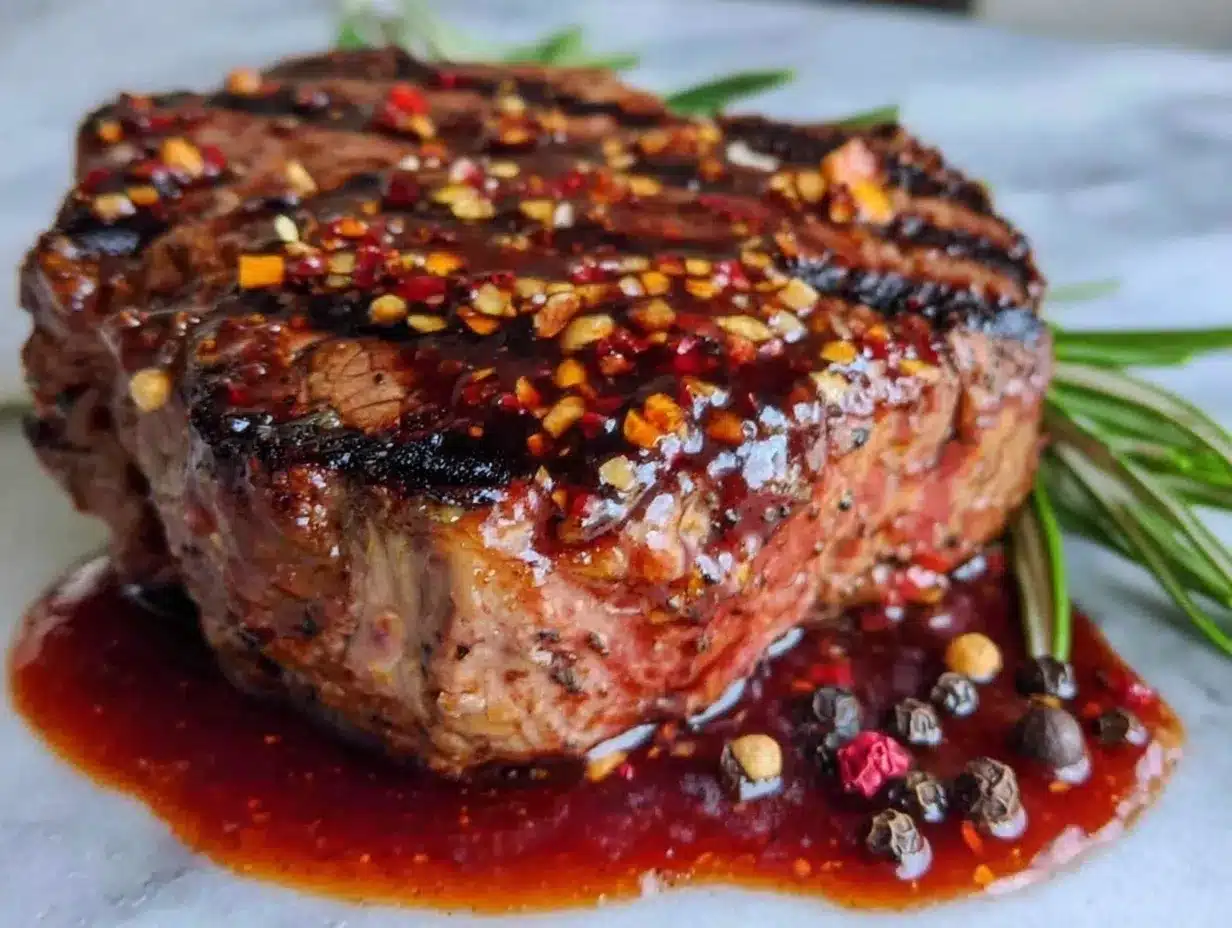
You don’t need a fancy kitchen to make this sauce. A standard 10-inch skillet is all you really need. I prefer stainless steel for this because it allows me to see the color changes in the wine clearly, which is important for timing. However, a good quality non-stick pan works just as well if you are worried about sticking.
You will also need a wooden spoon or a heat-safe spatula for stirring. A wooden spoon is great because it doesn’t scratch the pan and helps scrape up those flavorful browned bits from the bottom. A measuring cup is helpful for the wine and broth, though you can eyeball it if you are experienced. Finally, have a small whisk ready for the final step. This is crucial for incorporating the cold butter into the hot sauce without it separating. A simple wire whisk is perfect for this emulsification process.
Preparation Method
Ready to make this rich red wine reduction sauce? Follow these steps carefully for the best results. The key is to watch the reduction closely, as the difference between perfect and burnt is just a minute or two.
- Prep the Aromatics (2 minutes): Start by mincing the shallots and garlic finely. Have your wine, broth, and butter measured and ready to go. This is called mise en place, and it prevents you from burning things while you are chopping. If you rush this step, you might end up with large chunks of raw onion in your sauce.
- Sauté the Shallots (3 minutes): Heat your skillet over medium heat. Add a small splash of olive oil or a teaspoon of butter. Once shimmering, add the minced shallots. Cook them gently until they are soft and translucent, about 2-3 minutes. Do not brown them too much; you want sweetness, not bitterness. Stir frequently to ensure even cooking.
- Add Garlic and Thyme (1 minute): Add the minced garlic and thyme sprigs to the pan. Cook for just one minute until fragrant. Be careful not to burn the garlic, as it turns bitter instantly. The smell should be aromatic and inviting.
- Deglaze with Wine (5-7 minutes): Pour in the 1 cup of red wine. Use your wooden spoon to scrape up any browned bits from the bottom of the pan. These bits are pure flavor. Let the wine come to a simmer. You want it to bubble gently, not boil violently. This is where the magic happens as the alcohol cooks off and the flavors concentrate.
- Add Broth and Reduce (10-12 minutes): Pour in the beef broth. Increase the heat slightly to bring it back to a simmer. Let it cook uncovered. You want to reduce the liquid by about half to two-thirds. This should take about 10-12 minutes. The sauce will darken in color and thicken slightly. Taste it occasionally to check the saltiness and intensity.
- Strain the Sauce (Optional but Recommended): If you prefer a completely smooth sauce, strain it through a fine-mesh sieve into a small bowl. Press on the shallots to extract all the flavor, then discard the solids. If you like some texture, you can skip this step. I usually strain it for a more elegant presentation.
- Finish with Butter (1 minute): Return the strained sauce to the warm pan (off the heat) or keep it warm on very low heat. Whisk in the cold, cubed butter one piece at a time. The sauce should become glossy and slightly thickened. This step is called monosauçage, and it gives the sauce that rich, velvety mouthfeel.
- Season and Serve: Taste the sauce. Add black pepper and salt only if needed. Remember, the sauce will continue to thicken as it cools. Serve immediately over your favorite meat or vegetables.
What if the sauce is too thin?
If you find the sauce is still too watery after reducing, you can simmer it for a few more minutes. Just keep a close eye on it to prevent burning. Alternatively, you can mix a teaspoon of cornstarch with a tablespoon of cold water and stir it in, but the butter emulsion usually provides enough body.
What if the sauce is too thick?
No worries! Simply whisk in a splash of additional broth or water to thin it out to your desired consistency. It’s easy to adjust at the end.
Cooking Tips & Techniques
There are a few tricks I’ve learned over the years to make this rich red wine reduction sauce foolproof. The biggest mistake people make is turning up the heat too high. High heat can cause the wine to evaporate too quickly, leaving behind harsh, concentrated tannins that taste bitter. Always keep the heat at a gentle simmer. This allows the flavors to meld slowly and evenly.
Another tip is to use cold butter. Adding cold butter to the hot sauce creates an emulsion that stabilizes the sauce and gives it that shiny, professional look. If you use warm butter, the sauce might look greasy or separate. Whisking constantly while adding the butter is key. It’s a bit of a workout for your wrist, but the result is worth it.
Don’t skip the deglazing step. Those browned bits stuck to the bottom of the pan are called fond, and they are packed with flavor. Scraping them up ensures you don’t waste any of that deliciousness. If you forget to scrape, your sauce will lack depth. Also, taste the wine before you buy it. If it tastes sour or vinegary, it will taste worse in the sauce. Stick to dry wines with good fruit notes.
Variations & Adaptations
While the classic version is fantastic, you can tweak this rich red wine reduction sauce to suit different tastes or dietary needs. Here are a few ideas that work well:
- Blue Cheese Variation: For a bold twist, stir in 2 tablespoons of crumbled blue cheese at the end. This creates a creamy, tangy sauce that is incredible with steak. It’s a bit indulgent but very satisfying.
- Port Wine Swap: Replace half of the red wine with port wine. Port is sweeter and richer, which adds a luxurious depth to the sauce. This is great for dessert sauces or rich stews.
- Vegetarian Option: Swap the beef broth for a robust vegetable broth or mushroom broth. Mushroom broth adds an earthy umami flavor that pairs beautifully with the wine, making it perfect for mushrooms or roasted vegetables.
- Spicy Kick: Add a pinch of red pepper flakes or a dash of hot sauce when you add the garlic. This adds a nice heat that cuts through the richness of the butter and wine.
- Honey Glaze: If you prefer a sweeter sauce, add a teaspoon of honey when you add the broth. This balances the acidity of the wine and creates a glaze-like consistency.
I once tried adding a splash of balsamic vinegar for extra tang, and it worked surprisingly well with pork chops. Experimenting is part of the fun, so don’t be afraid to adjust the flavors to your liking.
Serving & Storage Suggestions
This sauce is best served immediately while it is warm and glossy. It pairs wonderfully with grilled ribeye steak, pan-seared duck breast, or roasted lamb chops. It also makes a great drizzle over mashed potatoes or polenta for a comforting vegetarian meal. For presentation, spoon the sauce over the meat just before serving to keep the texture intact.
If you have leftovers, store the sauce in an airtight container in the refrigerator for up to 3 days. The sauce will thicken significantly in the fridge due to the butter and reduction. To reheat, gently warm it in a small saucepan over low heat, adding a splash of water or broth to thin it out. You can also freeze it for up to 3 months, though the texture may change slightly upon thawing. Reheating slowly is key to restoring the emulsion.
Does the flavor improve over time?
Yes, like many sauces, the flavors often meld and deepen after sitting in the fridge for a day. However, the texture is best when fresh. If you are meal prepping, consider making the sauce the day you plan to eat the meal.
Nutritional Information & Benefits
While this sauce is rich and indulgent, it is best enjoyed in moderation. A typical serving (about 2 tablespoons) contains approximately 80-100 calories, depending on the amount of butter used. The red wine provides antioxidants like resveratrol, which are beneficial for heart health. However, the alcohol is cooked off, so the nutritional benefits are minimal. The butter adds saturated fat, so balance your meal with lean proteins and vegetables. This sauce is not gluten-free by default if you use certain broths, so always check labels if you have celiac disease. Overall, it’s a flavorful addition that satisfies cravings without being overly heavy.
Conclusion
Making a rich red wine reduction sauce at home is easier than you think, and the results are absolutely worth the effort. It transforms simple ingredients into something extraordinary with just a little time and attention. I hope this guide helps you feel confident in your kitchen and encourages you to experiment with flavors. Don’t be afraid to adjust the seasoning or try a variation that suits your palate. Cooking is all about personal preference and having fun.
I’d love to hear how this recipe works for you! Have you tried adding blue cheese or port wine? Share your variations in the comments below. If you make this sauce, please take a photo and tag me, or share it with friends who love good food. Happy cooking, and enjoy every bite!
FAQs
Can I use white wine instead of red wine?
Yes, you can use white wine, but the flavor profile will be completely different. A white wine reduction will be lighter and more acidic, which is better for chicken or fish dishes. For a rich, dark sauce like this, red wine is the traditional and recommended choice.
How do I fix a sauce that is too salty?
If the sauce is too salty, you can try adding a potato to the pan while it simmers. The potato will absorb some of the salt. Alternatively, add a splash of water or unsalted broth to dilute the saltiness. A pinch of sugar can also help balance the salt.
Is this sauce suitable for keto diets?
Yes, this sauce is naturally low-carb and keto-friendly, as it is made from wine, butter, and broth. Just ensure you use a low-sodium broth without added sugars. The wine reduces, concentrating the flavors but leaving most of the sugar behind if you strain it, but check the specific wine’s sugar content.
Can I make this sauce ahead of time?
Absolutely. You can make the sauce up to two days in advance. Store it in the fridge and reheat gently when ready to serve. You may need to add a little liquid when reheating to restore the consistency.
What is the best wine to use for cooking?
Use a dry red wine like Cabernet Sauvignon, Merlot, or Pinot Noir. Avoid wines labeled “cooking wine” as they contain preservatives and salt. The rule of thumb is: if you wouldn’t drink it, don’t cook with it.
Pin This Recipe!
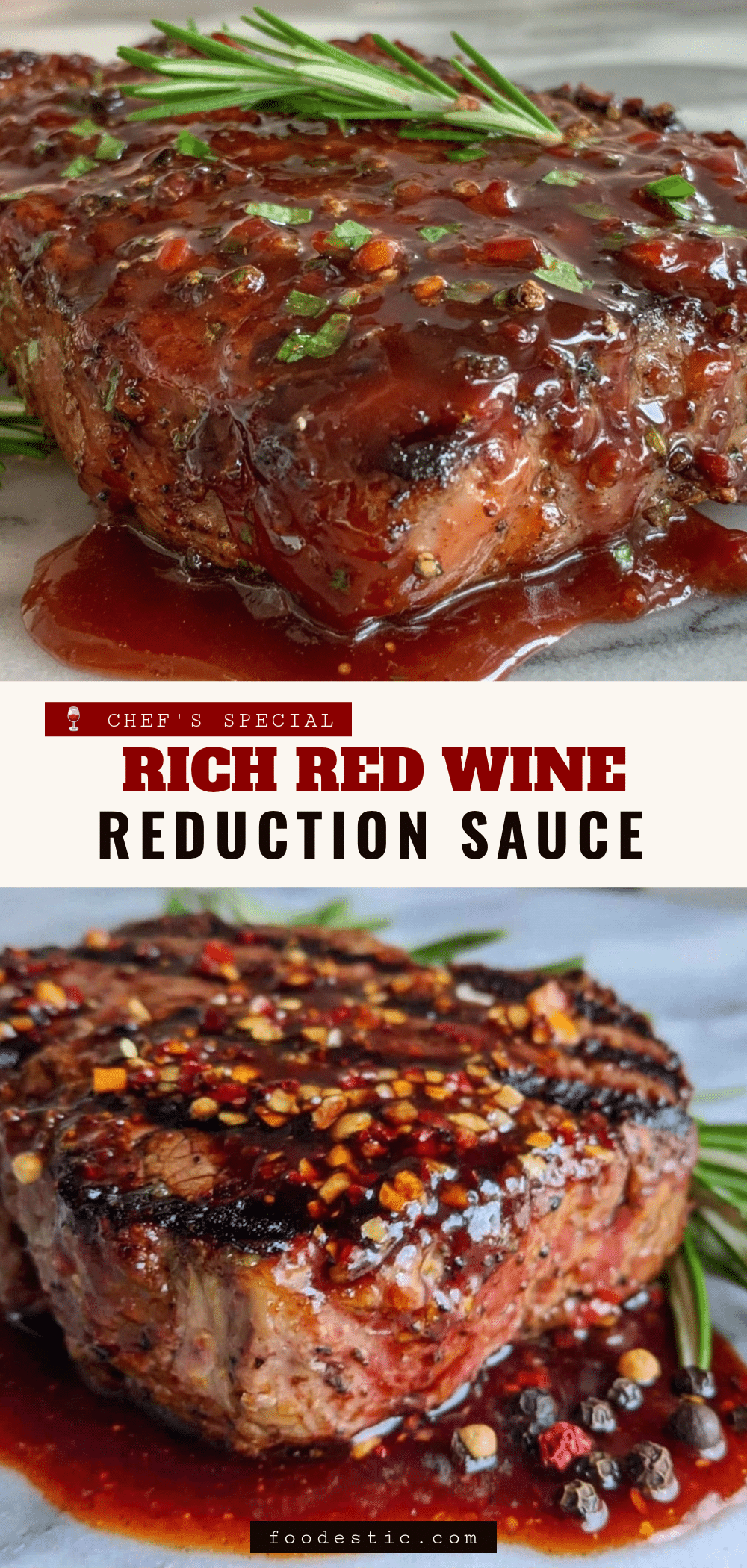
Rich Red Wine Reduction Sauce: Easy 5-Minute Sauce
- Total Time: 17 minutes
- Yield: 4 servings 1x
Description
A quick, elegant, and versatile red wine reduction sauce that elevates any meal with deep, earthy flavors and a silky smooth texture.
Ingredients
- 1 cup dry red wine (Cabernet Sauvignon or Merlot)
- 2 medium shallots, finely minced
- 1/2 cup low-sodium beef broth
- 2 tablespoons cold unsalted butter, cubed
- 2–3 sprigs fresh thyme
- 1 clove garlic, minced
- Freshly cracked black pepper to taste
- Kosher salt, added sparingly
- Optional: Pinch of sugar
- Optional: Splash of olive oil or teaspoon of butter for sautéing
Instructions
- Mince shallots and garlic finely. Measure wine, broth, and butter (mise en place).
- Heat a 10-inch skillet over medium heat. Add a splash of oil or butter, then add minced shallots. Cook gently for 2-3 minutes until soft and translucent.
- Add minced garlic and thyme sprigs. Cook for 1 minute until fragrant, being careful not to burn the garlic.
- Pour in the red wine. Use a wooden spoon to scrape up browned bits (fond) from the bottom of the pan. Simmer gently for 5-7 minutes to reduce alcohol.
- Add beef broth. Increase heat slightly to bring back to a simmer. Cook uncovered for 10-12 minutes, reducing liquid by half to two-thirds until it darkens and thickens.
- Optional: Strain sauce through a fine-mesh sieve, pressing on solids to extract flavor, then discard solids.
- Return sauce to warm pan (off heat). Whisk in cold cubed butter one piece at a time until glossy and emulsified.
- Season with black pepper and salt to taste. Serve immediately.
Notes
Use a wine you would drink; avoid cooking wines. Keep heat at a gentle simmer to prevent bitterness. Use cold butter for proper emulsion. If sauce is too thin, simmer longer; if too thick, add splash of broth or water. Can be stored in fridge for 3 days or frozen for 3 months.
- Prep Time: 2 minutes
- Cook Time: 15 minutes
- Category: Sauce
- Cuisine: French
Nutrition
- Serving Size: 2 tablespoons
- Calories: 90
- Sugar: 2
- Sodium: 150
- Fat: 6
- Saturated Fat: 3.5
- Carbohydrates: 4
- Protein: 1
Keywords: red wine sauce, reduction sauce, steak sauce, easy sauce, weeknight dinner, gourmet sauce, wine reduction, shallot sauce