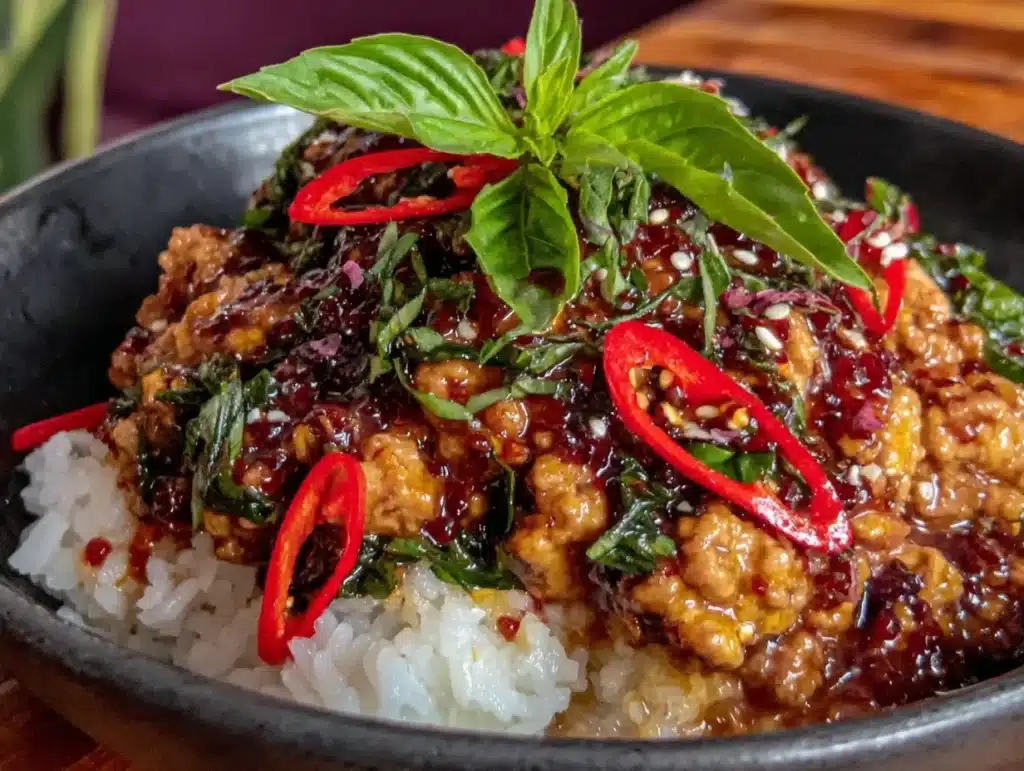
There is nothing quite like the smell of garlic and chilies hitting hot oil to wake up your entire house. I remember the first time I tried this dish in a tiny, steamy alleyway stall in Bangkok. It was raining, I was soaked, and the vendor just shrugged and handed me a plate of sizzling chicken with a side of rice. The heat hit me instantly, but the sweet basil underneath kept me coming back for more. Honestly, it was love at first bite. That meal changed how I think about weeknight dinners. I used to think Thai food required hours of prep and a trip to the specialty market. I was wrong.
This spicy Thai basil chicken recipe changed everything for me. It’s fast, it’s fiery, and it tastes like a vacation. I’ve made this dish over a dozen times in my own kitchen, tweaking the spice levels and testing different cuts of meat. As someone who values quick meals that don’t sacrifice flavor, this has become my go-to. You know how hard it is to find a recipe that actually takes fifteen minutes? This one does. It’s perfect for busy parents, late workers, or anyone who just wants good food without the stress. Let’s face it, life is busy, but dinner doesn’t have to be complicated.
I’ve tested this recipe with both ground chicken and diced thighs to see which works best. Ground chicken is quicker, but diced meat gives you a better texture. I usually stick with ground chicken on Tuesdays because it’s faster to cook. The key is getting that wok hei, or breath of the wok, flavor at home. It’s not just about the ingredients; it’s about the heat and the speed. I also love that this dish fits into a high-protein diet if you watch your portions. It’s comforting yet light. If you’ve been looking for a new weeknight staple, this spicy Thai basil chicken is the answer. It brings the restaurant experience right to your table without the wait.
Why You’ll Love This Recipe
After years of cooking Thai food, I’ve learned that the best dishes are the ones that respect your time. This recipe isn’t just another version of pad kra pao; it’s my refined, tested version that actually works in a standard home kitchen. I’ve struggled with bland stir-fries before, where the sauce tastes watery or the meat is dry. Not this one. I developed this method to ensure every bite is packed with flavor and the chicken stays tender. It’s not just good; it’s the kind of meal that makes you close your eyes after the first bite because the balance of salty, sweet, and spicy is just right.
- Quick & Easy: Comes together in under 15 minutes, perfect for busy weeknights or last-minute cravings. You really don’t need more time than that.
- Simple Ingredients: No fancy grocery trips needed; you likely already have everything in your kitchen. Soy sauce, fish sauce, chilies, and basil are common staples.
- Perfect for Weeknights: Great for busy families or anyone who wants a hot meal fast. It’s reliable and consistent.
- Crowd-Pleaser: Always gets rave reviews from kids and adults alike, especially if you adjust the chili heat.
- Unbelievably Delicious: The texture and flavor combo is next-level comfort food. The contrast between the savory meat and the aromatic basil is addictive.
What makes this recipe different from the rest is the specific ratio of sauces. Many recipes get the balance wrong, making it too salty or too sweet. I’ve nailed the proportions so you don’t have to guess. It’s also about the technique. I crush the garlic and chilies by hand to release more oils, which changes the flavor profile completely. It’s comfort food reimagined—faster, but with the same soul-soothing satisfaction. It’s perfect for impressing guests without stress, or turning a simple meal into something memorable. You’ll find yourself making this repeatedly because it just works.
What Ingredients You Will Need
This recipe uses simple, wholesome ingredients to deliver bold flavor and satisfying texture without the fuss. You don’t need a whole pantry of exotic items. Most of these are likely already in your fridge or spice cabinet. The magic happens when these basic components meet high heat. I recommend using fresh ingredients whenever possible, especially the basil and chilies, as dried versions just don’t cut it for this dish. The freshness is what gives it that signature Thai aroma that fills your home.
- Ground Chicken: 500 grams (1.1 lbs). I prefer lean ground chicken for a lighter dish, but you can use ground pork if you prefer. It cooks evenly and quickly.
- Thai Holy Basil: A large handful. If you can’t find holy basil, sweet basil is a good substitute, though the flavor will be slightly milder. Thai basil has those distinct anise notes.
- Garlic: 6-8 cloves, minced. Don’t skimp on the garlic. It’s the backbone of this dish. Use fresh garlic, not jarred, for the best flavor.
- Thai Bird’s Eye Chilies: 4-6 chilies, crushed. These are small but incredibly hot. Adjust the number based on your heat tolerance. Crush them slightly to release the seeds and heat.
- Fish Sauce: 2 tablespoons. This adds the salty, umami depth. Use a high-quality brand like Squid or Red Boat for the best flavor. It smells strong but tastes great when cooked.
- Soy Sauce: 1 tablespoon. I use regular light soy sauce for salinity. Dark soy sauce is optional if you want a deeper color, but it’s not necessary.
- Oyster Sauce: 1 tablespoon. This adds a rich, savory sweetness. If you need a vegetarian option, use vegetarian oyster sauce made from mushrooms.
- Sugar: 1 teaspoon. Palm sugar is traditional, but white sugar works fine. It balances the saltiness of the fish and soy sauces.
- Vegetable Oil: 2 tablespoons. You need enough oil to create a sauce that coats the meat. Coconut oil can be used, but neutral oil is better for high heat.
- Eggs: 2 large eggs. Fried eggs with runny yolks are the traditional topping. They add richness and help cool down the spice.
- White Rice: Steamed jasmine rice. This is essential for soaking up the sauce. Do not skip the rice; it’s the perfect partner to the spicy chicken.
I recommend buying your fish sauce from a reputable brand to ensure authenticity. Look for clear, amber-colored liquid without too much sediment. For the chilies, if you can’t find bird’s eye chilies, serrano peppers are a decent alternative, though less intense. The key is to use fresh basil and add it at the very end so it doesn’t wilt into oblivion. Keep the ingredients simple and let the flavors shine.
Equipment Needed
You don’t need fancy gear to make this dish, but having the right tools helps. A wok is ideal because its shape allows for even heating and easy tossing. If you don’t have a wok, a large skillet or cast-iron pan works well. The most important thing is that the pan is wide enough to let the moisture escape quickly. A flat-edged spatula is also helpful for scraping the bottom of the pan and mixing the sauce evenly. I’ve tried using wooden spoons, but they don’t scrape as effectively, and you end up with sticky bits that burn.
A mortar and pestle is traditional for crushing the garlic and chilies, but a knife works too. I usually just chop them finely and then press them with the side of my knife to release the juices. It’s faster and doesn’t require extra cleanup. For frying the eggs, a small non-stick pan is convenient. You can also use the same wok if you have enough space, but it might get crowded. I recommend having a small bowl ready to mix your sauces before you start cooking. This is called mise en place, and it’s crucial for a 15-minute recipe. If you wait to mix the sauces while the chicken is cooking, it will overcook. Keep it simple and efficient.
Preparation Method
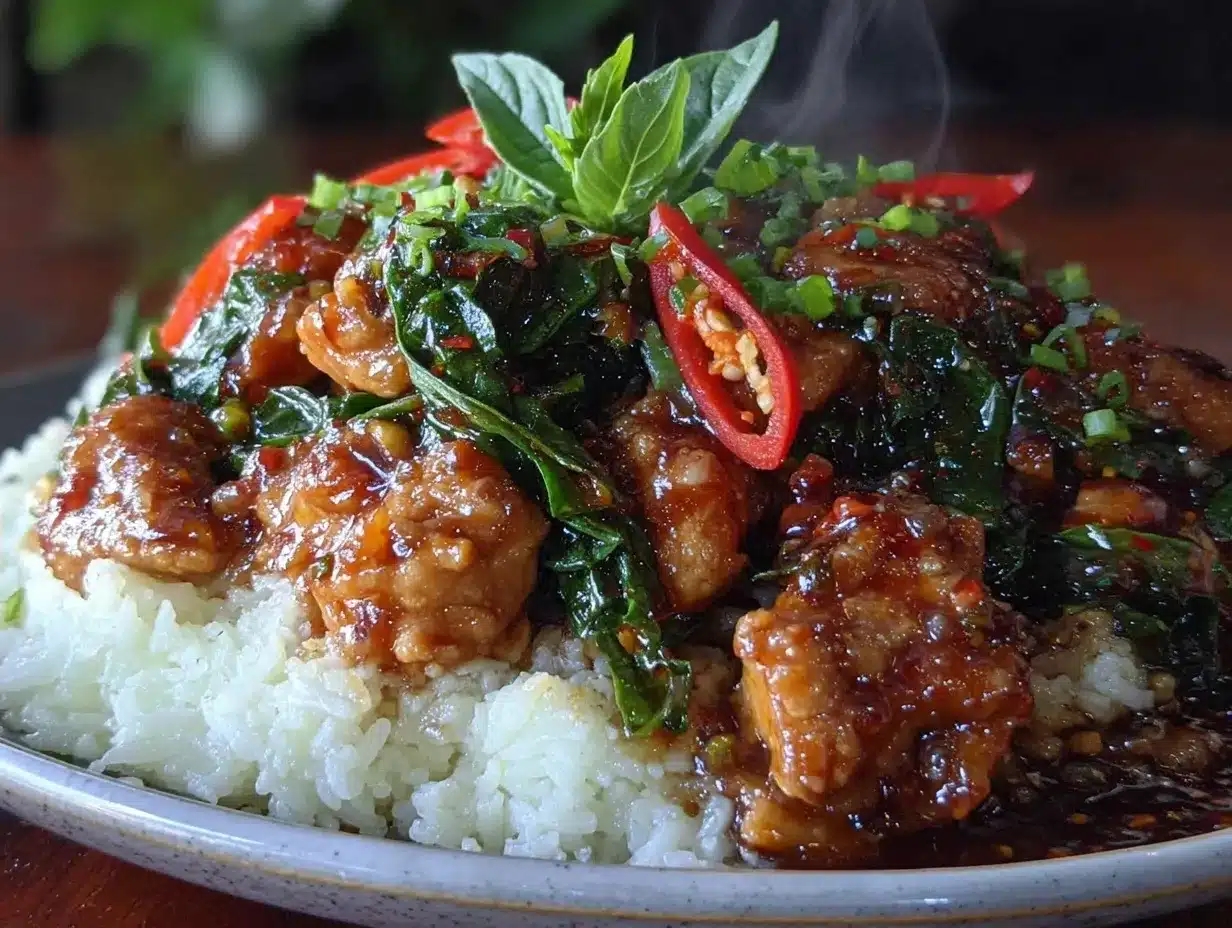
First, prepare your ingredients. Mince the garlic and crush the chilies. If using a mortar and pestle, add the chilies and garlic and pound them until they are a coarse paste. This releases the essential oils and creates a fragrant base. If using a knife, chop them finely and then press them flat with the blade. Set this aside. Next, mix the sauces in a small bowl. Combine the fish sauce, soy sauce, oyster sauce, and sugar. Stir until the sugar is dissolved. This ensures that every piece of chicken gets an even coating of flavor. You don’t want to be mixing sauces while the pan is hot.
Heat your wok or skillet over high heat. Wait until it’s smoking slightly. This is crucial for achieving that smoky flavor. Add the vegetable oil and swirl it around to coat the surface. Once the oil is shimmering, add the garlic and chili paste. Stir-fry for about 30 seconds until it’s fragrant. Be careful not to burn the garlic, as it will turn bitter. The aroma should fill the kitchen immediately. If it starts to smoke too much, lower the heat slightly, but keep it high.
Add the ground chicken to the pan. Break it up with your spatula as you add it. You want small, even crumbles. Cook for 2-3 minutes, stirring constantly. The chicken should turn from pink to white. Don’t let it sit too long, or it will steam instead of fry. Once the chicken is cooked through, pour the sauce mixture over the meat. Toss everything together quickly. The sauce will bubble and thicken almost instantly. Cook for another minute, allowing the flavors to meld. The chicken should be glossy and coated in the dark sauce.
Turn off the heat. This is the most important step. Add the Thai basil leaves to the hot pan. Use the residual heat to wilt the basil. Stir gently for 10-15 seconds. The basil should just start to wilt but still retain some texture. If you cook it too long, it will turn black and lose its flavor. Remove the chicken from the heat and plate it immediately. Serve with steamed jasmine rice and a fried egg on top. The runny yolk mixes with the spicy sauce for a creamy, rich bite. Enjoy while it’s hot.
How do I know when the chicken is done?
The chicken is done when it is no longer pink and has turned opaque white. It should be cooked through but still moist. If it looks dry, you may have cooked it too long.
Can I use chicken breast instead of ground chicken?
Yes, you can dice chicken breast into small cubes. It takes a bit longer to cook, so adjust the time accordingly. Diced thigh meat is juicier and more forgiving.
Cooking Tips & Techniques
High heat is your best friend here. Thai stir-fries rely on intense heat to cook food quickly and create that smoky flavor. If your pan isn’t hot enough, the chicken will steam in its own juices, resulting in a soggy dish. Make sure your pan is preheated properly. Also, don’t overcrowd the pan. If you’re cooking for a large family, cook in batches. This ensures the temperature stays high and the food fries rather than steams. I learned this the hard way when I tried to cook everything at once and ended up with a mess.
Another tip is to use the right oil. Neutral oils with a high smoke point, like vegetable or canola oil, work best. Olive oil has a lower smoke point and can burn, giving the dish a bitter taste. Also, taste the sauce before adding it to the pan. Fish sauce can vary in saltiness, so adjust the amount if needed. I usually add a splash of water if the sauce is too thick. It helps to create a glossy coating on the chicken. Don’t be afraid to adjust the spice level. If you can’t handle the heat, remove the seeds from the chilies. They hold most of the capsaicin.
Multitasking is key. While the chicken is cooking, boil the water for the rice and fry the eggs. This way, everything is ready at the same time. I also recommend having your basil ready to go. It goes in at the very last second, so if you’re chopping it while the chicken is cooking, it might lose its freshness. Keep it in a bowl nearby. These small steps make a big difference in the final result. Consistency comes from practice, so don’t worry if it’s not perfect the first time. You’ll get better with each attempt.
What if I don’t have fish sauce?
You can substitute fish sauce with soy sauce, but the flavor will be different. Fish sauce adds a unique umami depth. For a vegetarian option, use soy sauce or tamari.
Why is my chicken dry?
Ground chicken can dry out if overcooked. Cook it quickly over high heat and remove it from the pan as soon as it’s done. Don’t let it sit in the hot pan after turning off the heat.
Variations & Adaptations
This recipe is very flexible, so feel free to make it your own. If you don’t eat chicken, you can use ground pork, shrimp, or tofu. Ground pork is a classic alternative and adds a richer flavor. For vegetarians, firm tofu works well. Press the tofu to remove excess water, then fry it until crispy before adding the sauce. You can also add vegetables like bell peppers, onions, or broccoli. Add them before the chicken so they have time to cook. This makes the dish more filling and nutritious.
If you want a different flavor profile, try adding a splash of coconut milk at the end. It creates a creamy, milder curry-like taste. This is great for kids who can’t handle the spice. You can also add a squeeze of lime juice before serving for extra brightness. The acidity cuts through the richness of the sauce. For a gluten-free version, use tamari instead of soy sauce and ensure your oyster sauce is gluten-free. Most oyster sauces contain wheat, so check the label.
I’ve also tried adding a spoonful of peanut butter to the sauce. It adds a nutty richness that pairs well with the spice. It’s a bit unconventional, but it works surprisingly well. Another variation is to add a fried shallot on top for extra crunch. It adds texture and a sweet, savory note. These adaptations make the recipe versatile enough for any taste. Don’t be afraid to experiment. Cooking is about creativity, so find what works for you.
Can I make this ahead of time?
It’s best made fresh, but you can prep the ingredients ahead. Chop the garlic and chilies and mix the sauces in advance. Store them in the fridge for up to 24 hours.
Is this recipe spicy?
Yes, it can be very spicy depending on the chilies used. Bird’s eye chilies are hot. Adjust the number of chilies or remove the seeds to reduce the heat.
Serving & Storage Suggestions
Serve this dish immediately while it’s hot. The basil loses its aroma quickly, so it’s best enjoyed fresh. Plate the spicy chicken over a mound of steamed jasmine rice. Top with a fried egg, sunny-side up. The runny yolk adds a creamy element that balances the spice. Garnish with fresh chili slices and extra basil leaves for presentation. This dish looks vibrant and appetizing, perfect for sharing. You can also serve it with cucumber slices on the side for a refreshing crunch.
Leftovers can be stored in an airtight container in the refrigerator for up to 3 days. The flavors actually develop overnight, so it might taste even better the next day. Reheat in a skillet over medium heat with a splash of water to prevent drying out. You can also microwave it, but the texture may change slightly. Freeze the chicken mixture for up to 1 month. Thaw in the fridge before reheating. The basil should be added fresh when reheating, as frozen basil doesn’t hold up well.
I usually make a double batch of rice, as this dish goes fast. The sauce is delicious and you’ll want to soak it up. It’s also great for meal prep. Pack the chicken and rice in separate containers to keep the rice from getting soggy. This is a great option for lunch at work. The heat from the chilies can also boost your metabolism, making it a functional meal as well as a tasty one.
How long do leftovers last?
Leftovers last up to 3 days in the refrigerator. Store in an airtight container to maintain freshness.
Can I freeze this recipe?
Yes, you can freeze the chicken mixture without the basil. Thaw and reheat, then add fresh basil when serving.
Nutritional Information & Benefits
This spicy Thai basil chicken is a high-protein, low-carb friendly meal. Ground chicken is a lean source of protein, which helps build and repair muscle. The dish is rich in umami flavors from the fish and oyster sauces, which can enhance satiety. It’s also relatively low in calories if you skip the extra oil and rice. The chilies contain capsaicin, which may boost metabolism and reduce appetite. Basil is packed with antioxidants and anti-inflammatory properties. It’s a healthy choice that doesn’t feel like a diet meal.
However, be mindful of the sodium content from the fish and soy sauces. If you’re watching your salt intake, use low-sodium versions or reduce the amount. The dish is naturally gluten-free if you use tamari. It’s also dairy-free, making it suitable for those with lactose intolerance. I enjoy this dish as part of a balanced diet, pairing it with plenty of vegetables. It’s a great way to get your protein without feeling heavy. The spice also adds a metabolic kick, which is a nice bonus.
Is this dish healthy?
Yes, it is high in protein and low in carbs. The main consideration is the sodium content from the sauces.
Can I make this low-carb?
Absolutely. Skip the rice and serve it over cauliflower rice or zucchini noodles for a low-carb option.
Conclusion
This spicy Thai basil chicken is a game-changer for weeknight dinners. It’s fast, flavorful, and incredibly satisfying. I hope you try this recipe and find it as enjoyable as I do. It’s a testament to the fact that great food doesn’t have to be complicated. With just a few simple ingredients and some high heat, you can create a restaurant-quality meal at home. Don’t be afraid to adjust the spice level to suit your taste. Make it your own and enjoy the process.
I’d love to hear how it turns out for you. Let me know if you have any questions or if you tried a variation. Share your photos or comments below. I read every single one and love seeing your creations. This recipe has been a staple in my home for years, and I’m sure it will become one in yours too. Happy cooking!
What is the best side dish for this recipe?
Steamed jasmine rice is the traditional side. Cucumber slices also work well to cool down the spice.
Frequently Asked Questions
What is the difference between holy basil and sweet basil?
Holy basil has a peppery, anise-like flavor, while sweet basil is milder and sweeter. Holy basil is traditional, but sweet basil is a good substitute.
Can I use ground turkey instead of chicken?
Yes, ground turkey works well. It may be slightly drier, so add a bit more oil or sauce.
How do I make the dish less spicy?
Use fewer chilies or remove the seeds. You can also add a pinch of sugar to balance the heat.
What kind of rice goes best with this?
Jasmine rice is the best choice. Its floral aroma complements the spicy chicken perfectly.
Can I add vegetables to this recipe?
Yes, bell peppers, onions, and broccoli are great additions. Add them before the chicken to cook through.
Pin This Recipe!
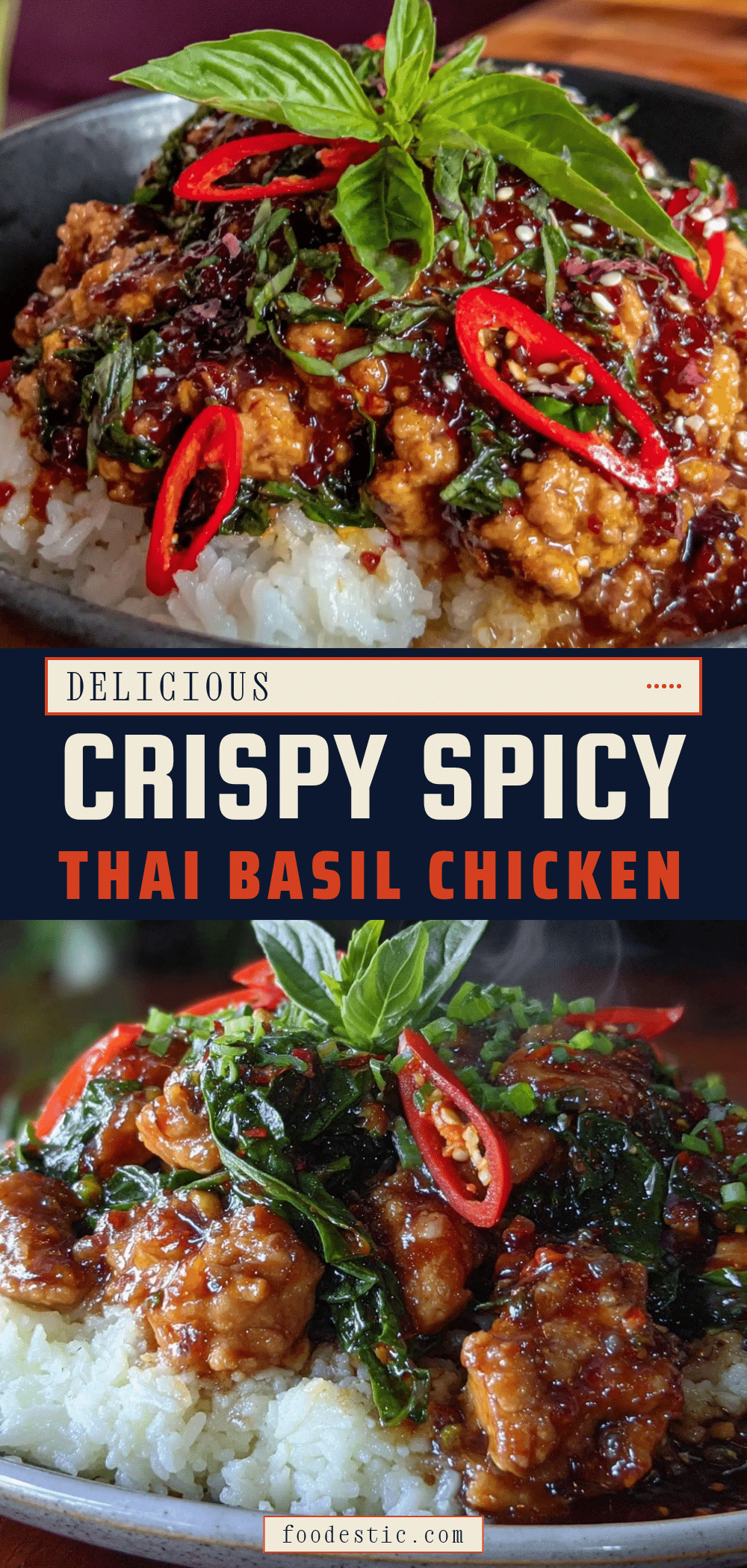
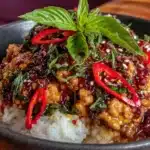
Spicy Thai Basil Chicken: 15-Minute Easy Dinner
- Total Time: 15 minutes
- Yield: 2 servings 1x
Description
A fast, fiery, and flavorful weeknight staple that brings the authentic taste of Bangkok street food to your home kitchen in under 15 minutes.
Ingredients
- 500 grams (1.1 lbs) ground chicken
- A large handful of Thai Holy Basil (or sweet basil)
- 6–8 cloves garlic, minced
- 4–6 Thai Bird’s Eye Chilies, crushed
- 2 tablespoons fish sauce
- 1 tablespoon soy sauce
- 1 tablespoon oyster sauce
- 1 teaspoon sugar (palm or white)
- 2 tablespoons vegetable oil
- 2 large eggs (for frying)
- Steamed jasmine rice
Instructions
- Mince the garlic and crush the chilies into a coarse paste using a mortar and pestle or the side of a knife.
- In a small bowl, mix the fish sauce, soy sauce, oyster sauce, and sugar until the sugar is dissolved.
- Heat a wok or large skillet over high heat until it is smoking slightly, then add the vegetable oil and swirl to coat.
- Add the garlic and chili paste to the hot oil and stir-fry for about 30 seconds until fragrant, being careful not to burn.
- Add the ground chicken to the pan, breaking it up into small crumbles with a spatula.
- Cook the chicken for 2-3 minutes, stirring constantly, until it turns from pink to opaque white.
- Pour the sauce mixture over the chicken and toss quickly to coat. Cook for another minute until the sauce bubbles and thickens.
- Turn off the heat and add the Thai basil leaves to the hot pan, stirring gently for 10-15 seconds until just wilted.
- Plate the chicken immediately over steamed jasmine rice.
- Top with a fried egg with a runny yolk and serve hot.
Notes
Ensure the pan is very hot to achieve ‘wok hei’ (breath of the wok) flavor and prevent steaming. Add basil at the very end using residual heat to preserve its aroma. Adjust chili quantity based on heat tolerance. For a vegetarian version, substitute chicken with firm tofu and use vegetarian oyster sauce.
- Prep Time: 5 minutes
- Cook Time: 10 minutes
- Category: Main Course
- Cuisine: Thai
Nutrition
- Serving Size: 1 plate with chicken
- Calories: 450
- Sugar: 4
- Sodium: 1200
- Fat: 22
- Saturated Fat: 6
- Carbohydrates: 35
- Fiber: 2
- Protein: 30
Keywords: Thai basil chicken, pad kra pao, quick dinner, spicy chicken, weeknight meals, high protein, gluten-free option